Global Alliance Launches to Combat Telecom Fraud with UN and Interpol Support
October 11, 2026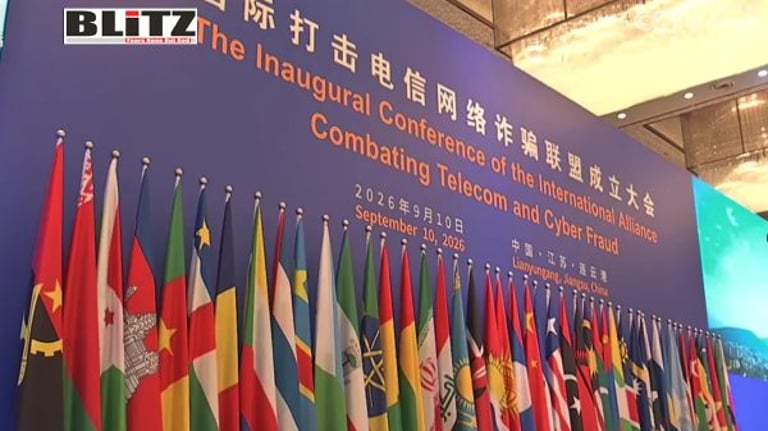

The International Alliance Combating Telecom and Cyber Fraud in Lianyungang signals a broadened, coordinated global effort with 46 founding and 34 observer countries, plus UN and Interpol involvement, to fight cyber-enabled crime.
Criminal networks move proceeds across multiple accounts and jurisdictions, making traceability and recovery difficult even after local arrests.
In early 2025, China, Myanmar, and Thailand set up a ministerial-level mechanism to combat gambling and telecom fraud, conducting ten repatriation operations and dismantling more than 630 buildings in KK Park, showing regional strategy and pressure on networks.
Effective anti-fraud efforts must target the entire criminal chain—from organizers and illicit proceeds to infrastructure, recruitment, and logistics, not just individual suspects.
Capacity-building, including training and technical support in digital forensics and financial investigations, is essential to strengthen neighboring countries’ ability to disrupt networks.
Beyond enforcement, stakeholders such as governments, financial institutions, telecom operators, and digital platforms must improve transaction monitoring, reporting, account security, and public awareness, while safeguarding the rule of law and human rights.
Criminals may use AI, synthetic identities, and advanced social engineering, requiring ongoing international cooperation, technological innovation, preventive measures, and public education to stay ahead.
UNODC estimates global economic losses from fraud in 2025 ranged from $88.3 billion to $114.1 billion across East and Southeast Asia, Australia, and surrounding regions, underscoring scale and impact.
Recent joint operations in Muse, Myanmar, with China, led to the arrest of 807 telecom fraud suspects, illustrating the effectiveness of international police cooperation.
A three-part documentary, The Demise of Telecom Fraud in Northern Myanmar, highlights global concern and the need for international cooperation to address telecom fraud.
Telecom fraud is a transnational crime leveraging digital tech, cross-border mobility, and enforcement gaps, with criminals operating from abroad and targeting victims globally.
China has advanced multi-country collaborations through mechanisms like China-Myanmar-Thailand coordination and Lancang-Mekong security cooperation, expanding information sharing and joint investigations.
Summary based on 1 source