Breakthrough Study Maps Alzheimer's Impact on Brain Cells at Single-Cell Resolution
October 14, 2026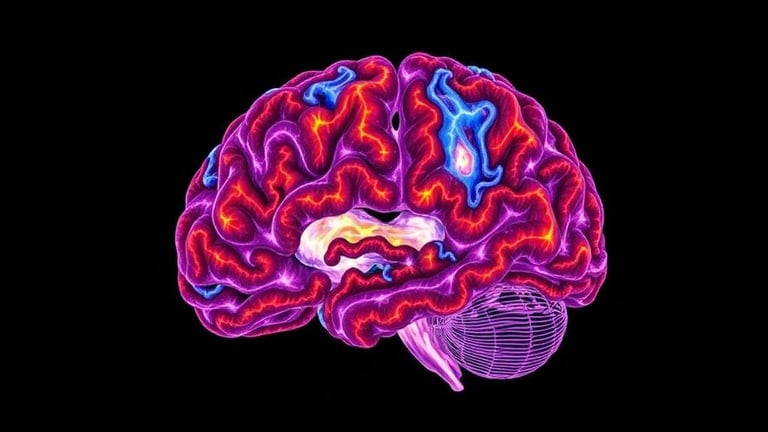

A new Nature Communications study uses postmortem human brain tissue and organoid models to map Alzheimer’s and related dementias at single-cell resolution, focusing on cerebellar granule and Purkinje cells and regulatory elements like SEZ6L2 and KANSL1.
The work achieves high-throughput, postmortem human brain data with simultaneous transcriptomic and chromatin accessibility profiling, creating a resource of regulatory linkages and cell-type–specific disease trajectories for future research.
Funding from the National Institute on Aging and partner institutions signals a coordinated, multi-center effort to advance dementia research.
By integrating epigenomic data with genome-wide association study results and chromatin maps, the study identifies two likely causal variants: one near SEZ6L2 in Purkinje cells and another near KANSL1 in granule cells.
The cerebellum is clinically plausible in dementia, given its neuronal abundance and emerging links to cognitive and emotional processing, implying cerebellar changes could contribute to symptoms beyond motor issues.
The dual-layer data yield 431,834 significant peak-to-gene linkages, outlining how regulatory elements control gene expression across cerebellar and cortical cell subtypes and how disease rewires these networks.
The authors caution that findings reflect snapshots from postmortem tissue and organoids and do not imply the cerebellum alone drives Alzheimer’s, advocating a whole-brain, cell-resolved view of dementia.
Two cerebellar granule cell genes, STMN1 and CLU, show disease-associated transcriptional shifts, with CLU linked to amyloid-beta clearance and stress, indicating granule cells undergo disease-relevant changes akin to cortical neurons.
CRISPR interference in cerebellar organoids silences regulatory elements, reducing SEZ6L2 and KANSL1 expression and perturbing neurodegenerative gene programs, supporting a regulatory mechanism.
The study analyzed 103,861 nuclei from cerebellum and frontal cortex across individuals with Alzheimer’s or related dementias and controls, using single-nucleus multiome sequencing to measure RNA and chromatin accessibility in the same cells.
A new single-cell atlas in Nature Communications maps the cerebellum in the context of Alzheimer’s and related dementias, revealing disease-associated molecular signatures and vulnerable cell types.
Translational potential includes targeting SEZ6L2 in Purkinje cells and KANSL1 in granule cells if causal roles are confirmed, plus using organoid CRISPR platforms to screen therapies against cell-type–specific regulatory mechanisms.
Summary based on 1 source
Get a daily email with more Science stories
Source
BIOENGINEER.ORG • Oct 14, 2026
Massive Cell-by-Cell Map Reveals the Cerebellum's Hidden Role in