Sonatype Launches Nexus Repository Pro+ with AI-Powered Firewall to Secure Software Development
October 14, 2026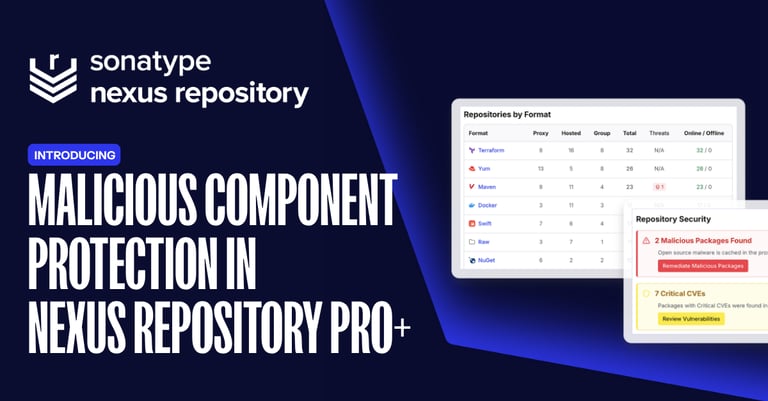

Sonatype unveils Nexus Repository Pro+ with an integrated Repository Firewall that stops malicious, vulnerable, or out-of-policy components at the point of entry, screening every open source package, AI model, and Model Context Protocol server as soon as it is requested by developers or AI agents.
The system blocks or quarantines problematic components at intake, using real-time threat intelligence and customer policies, to prevent threats from reaching builds and to maintain protection within development workflows without slowing the process.
By embedding the firewall directly into the repository, Nexus Repository Pro+ aims to accelerate secure development by keeping trust decisions at the front of the pipeline while enabling safe upgrades and faster access to safe components.
A companion Sonatype research combines public ecosystem data, anonymized Nexus telemetry, and policy activity to analyze adoption trends and governance implications as AI artifacts rapidly integrate into enterprise workflows.
In a measured population, Hugging Face requests faced about 7% policy blocks in Q2 2026, compared with Go at around 3.5% and Cargo at about 1%, underscoring governance challenges in AI model usage with model acceptability driving more than half of blocked models.
The product emphasizes front-of-punnel trust decisions to speed secure development, enabling both human and agent-based workflows to access safe components more efficiently.
TD Bank executives stress governance and guardrails as AI becomes more embedded in software development, highlighting regulatory expectations and the EU Cyber Resilience Act as context for stronger controls.
Industry and customers, including TD Bank, advocate stronger controls as software development increasingly uses AI and regulatory expectations rise, particularly with the EU Cyber Resilience Act reporting obligations taking effect in September 2026.
Key benefits include blocking unsafe components at intake, enabling safer upgrade paths with real-time intelligence, and maintaining protection within development workflows without interrupting routine dependency decisions.
The approach aims to reduce downstream remediation by 60–70% for residual high-risk issues and automate remediation, avoiding manual review bottlenecks while maintaining protection in development.
Sonatype Research Labs notes Go, Rust (Cargo), and Hugging Face artifacts reshaping enterprise dependencies, with Hugging Face growing fastest but experiencing policy-based blocking, signaling governance challenges for AI artifacts in enterprises.
The system’s protections extend to blocking or quarantining any malicious, vulnerable, or out-of-policy component before it reaches builds, reducing downstream remediation and build failures.
Summary based on 3 sources
Get a daily email with more Tech stories
Sources

markets.businessinsider.com • Oct 14, 2026
Sonatype Unveils Nexus Repository Pro+ to Stop Malicious Components Before Developers or AI Agents Pull Them Into Builds