New AI Method Aims to Cut Radiation in Cardiac CT Scans Without Sacrificing Accuracy
October 15, 2026

A University of Texas at Arlington study led by Mingwu Jin aims to substantially reduce radiation exposure in multi-phase cardiac CT angiography (MP-CCTA) without sacrificing diagnostic accuracy, using a deep learning–based reconstruction method (DRAC).
The research combines model-based iterative reconstruction with 4D deep learning to leverage a large MP-CCTA image database for sharper, lower-dose imaging without losing diagnostic reliability.
Graduate students Noor Rasel and Darnisha Langlais will collaborate with Jin, and the project will create opportunities to hire undergraduate researchers during summers to apply AI techniques to medical imaging.
The project supports education and collaboration across graduate and undergraduate levels, expanding hands-on opportunities in AI-driven medical imaging.
The DRAC project is funded by a three-year NIH grant totaling $579,745 from the National Heart, Lung, and Blood Institute.
The NIH-funded effort seeks to fuse MBIR and 4D reconstruction with deep learning to enable dose reduction while maintaining diagnostic accuracy in MP-CCTA.
The Mayo Clinic will provide MP-CCTA patient data to ensure training data reflect real-world variability, and researchers will evaluate diagnostic accuracy with computer models and a small-scale human observer validation.
Mayo Clinic data will help the study reflect variations in heart rate, body habitus, calcium deposits, and stents to test robustness of the DRAC approach.
If successful, the 4D DRAC method could reduce radiation doses in MP-CCTA and be applicable to other dynamic CT scans, potentially improving detection of coronary artery disease and monitoring high-risk plaque progression.
The team will build a synthetic patient library from retrospectively collected MP-CCTA data and develop 3D and 4D deep-learning methods to determine the lowest dose that maintains diagnostic accuracy.
DRAC will integrate CT physics with learned features from high-quality patient data, creating a 4D reconstruction approach that leverages a large image database.
MP-CCTA captures multiple heart phases to reduce motion blur but increases radiation; the DRAC approach aims to lower this dose while preserving image quality.
Summary based on 5 sources
Get a daily email with more Science stories
Sources

Mirage News • Oct 15, 2026
UTA Study Aims To Cut Radiation In Heart Scans
UTA study aims to cut radiation in heart scans - News Center - The University of Texas at Arlington
UTA study aims to cut radiation in heart scans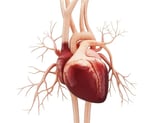
News-Medical • Oct 16, 2026
New study could help reduce radiation exposure during cardiac CT scans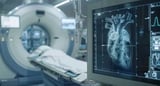
Medical Buyer • Oct 16, 2026
How to reduce radiation exposure during cardiac CT scans