Breakthroughs in Norrin–Frizzled4 Signaling Unveil Therapeutic Potential for Vascular and Neurological Disorders
October 21, 2026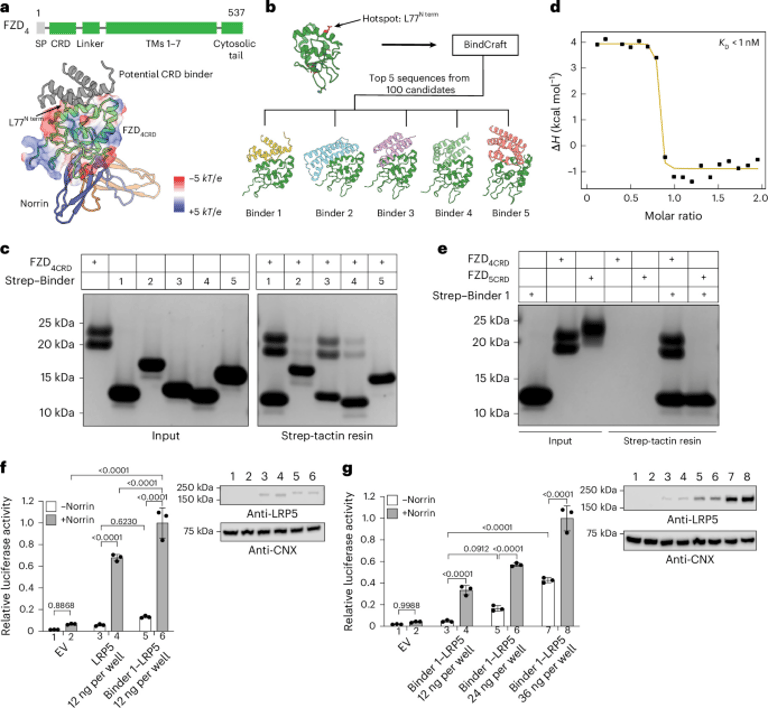

The story traces a progression from basic signaling mechanisms to structural elucidation and therapeutic strategies targeting the Norrin–Frizzled4/Wnt signaling axis.
Key findings identify Norrin as a growth factor with angiogenic and neuroprotective properties, and show that surrogate antibodies or engineered ligands can repair barrier defects in disease models.
Multiple studies define the core components of canonical Wnt signaling in vascular biology, including Frizzled receptors, LRP5/6 co-receptors, and modulators like TSPAN12.
The collection highlights disease relevance such as familial exudative vitreoretinopathy, retinal vascular disorders, and blood–brain barrier integrity, underscoring translational therapeutic potential.
The article compiles foundational and contemporary research on the Norrin–Frizzled4 signaling axis and its role in retinal vascular development, the blood–retina barrier, and CNS angiogenesis.
Key signaling axes include Norrin–Frizzled4–LRP5/6, Wnt7a/Wnt7b interactions, and the influence of auxiliary proteins and co-receptors in signal amplification and specificity.
Structural biology work delineates how Norrin interacts with Frizzled4 and LRP5/6, revealing high-affinity ligand–receptor interactions and the molecular basis of signal initiation.
Surrogate Wnt ligands and antibodies have been developed to phenocopy canonical Wnt signaling and therapeutically restore barrier function in retinal and neurological contexts.
Structural and mechanistic reviews address signalosome biogenesis, multiprotein complexes governing Wnt signaling, and strategies to pharmacologically modulate Frizzled receptors.
Summary based on 1 source