EU Aims €10 Billion Investment in Australian Minerals to Cut China Dependency
October 27, 2026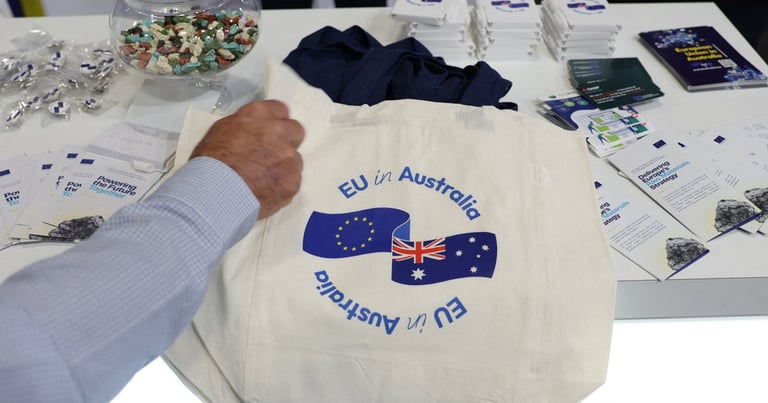

The European Union is planning a substantial investment in Australia’s critical minerals sector to diversify supply chains and reduce dependence on China, with EU Ambassador Lawrence Meredith signaling Australia as a key investment partner.
EU policy proposals envision up to €10 billion for critical raw materials within the broader €409 billion competitiveness fund, as part of the 2028-2034 budget discussions.
Strategic reserves would prioritize gallium, antimony, and rare earths as part of coordinated efforts to secure vital resources.
Many business groups and large companies push back, warning the plans could raise costs, add regulatory burdens, and force decisions where viable alternatives to China are not yet ready.
DiversifyEU may require businesses in key sectors to broaden their supplier base, potentially using tariffs or incentives tied to public contracts and subsidies to move supply away from Beijing.
The piece argues the EU should leverage a large integrated market and trade network to project influence, rather than relying mainly on regulation.
It suggests shifting from overreliance on regulatory power to a robust trade and economic strategy to maintain influence amid geopolitical and economic pressures.
Political backing for the measures appears to be growing, with a European Council summit showing support for the geoeconomic package and continued emphasis on reducing dependencies on China.
Feedback from submissions shows broad support for broadening supplier bases but concerns about feasibility, costs, and potential negative impacts on critical industries like rare earths, magnets, batteries, displays, semiconductors, and digital infrastructure.
The solidarity mechanism would provide compensation for companies facing retaliation in a trade dispute, while a rapid response trigger could close the EU market to countries engaging in active distortion or coercion.
On the export side, the plan envisions empowering European banks to provide capital in emerging economies, establishing Basel-standard safeguards, and creating a Savings and Investments Union to ease financing for growth.
The Federation of German Industries expresses skepticism, opposing new reporting requirements and binding mandates, arguing tariffs may be insufficient for diversification.
Summary based on 11 sources
Get a daily email with more EU News stories
Sources
Yahoo News • Oct 27, 2026
EU readying for major Australian resources investment, ambassador says
U.S. News & World Report • Oct 27, 2026
EU Readying for Major Australian Resources Investment, Ambassador Says
The Straits Times • Oct 27, 2026
EU readying for major Australian resources investment, ambassador says
Investing.com • Oct 27, 2026
EU readying for major Australian resources investment, ambassador says