Pakistan Drives MENAAP's Extreme Poverty Amid Rising Inflation and Energy Costs
October 7, 2026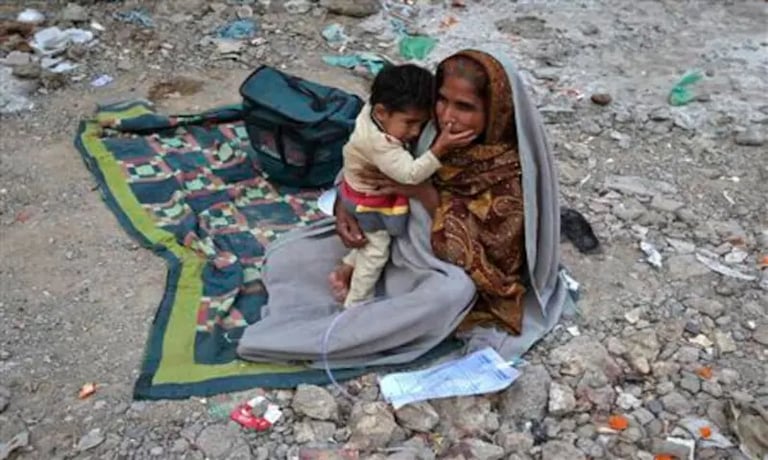


The World Bank’s October 2026 MENAAP Economic Update finds Pakistan accounts for roughly 48% of the region’s extreme poverty, with Afghanistan, Syria and Yemen together making up most of the remaining 47% as the region’s extreme poverty rises.
Poverty in the MENAAP region remains high, representing about 14% of the world’s extreme poor and trailing only Sub-Saharan Africa, after stagnation in poverty reduction since 2019 and a post-pandemic reversal.
In 2024, about 14.3% of MENAAP’s population lived on less than $3 a day and 26.9% on less than $4.20 a day, well above global rates of 10.4% and 18.9% respectively.
The World Bank urges targeted cash transfers and well-designed social assistance over broad subsidies to protect vulnerable households while preserving fiscal space, noting Pakistan’s targeted fuel and farm support responses to energy price rises.
Policy guidance emphasizes cushioning households from high prices while meeting humanitarian needs, with Pakistan highlighted for its targeted fuel and farm assistance measures.
Pakistan has already introduced targeted fuel and farm support to shield the poor from energy-price shocks, aiming to protect vulnerable groups without overburdening public finances.
Poverty growth in Pakistan is tied to a sequence of shocks and policy shifts, including IMF programs that improved fiscal indicators but constrained growth, along with high unemployment and weaker real incomes.
Pakistan’s economy shows a gradual recovery with GDP growth expected around 3.7% for the 2025-26 fiscal year and about 3.8% for 2026-27, yet per-capita gains remain modest amid inflation and higher energy costs.
Population-adjusted real GDP growth in Pakistan is projected near 2.2% for the current year, with the region averaging about 3.8% growth and inflation around 8-11% in 2026-27.
Despite gradual GDP gains, Pakistan’s poverty worsened, with 2025-26 growth at ~3.7% and 2026-27 at ~3.8%, while inflation and energy costs erode real gains.
Oil-importing countries in the region remain vulnerable to inflation, weaker remittances, and higher borrowing costs amid ongoing conflicts and global price pressures.
Energy price shocks, including more than a 40% rise in petrol and diesel since the Gulf conflict, have raised living costs and heightened vulnerability for poorer households, with inflation around 11% by mid-2026.
Summary based on 3 sources
Get a daily email with more Macroeconomics stories
Sources
The Express Tribune • Oct 7, 2026
Pakistan bears region s biggest poverty burden
Aaj English TV • Oct 7, 2026
World Bank: Pakistan accounts for 48% of MENAAP’s extreme poor
Aaj English TV • Oct 7, 2026
World Bank: Pakistan accounts for 48% of MENAAP’s extreme poor