Singapore's Cooling Revolution: Active Chilled Beams Slash Energy Use in Paya Lebar and Tuas
November 1, 2026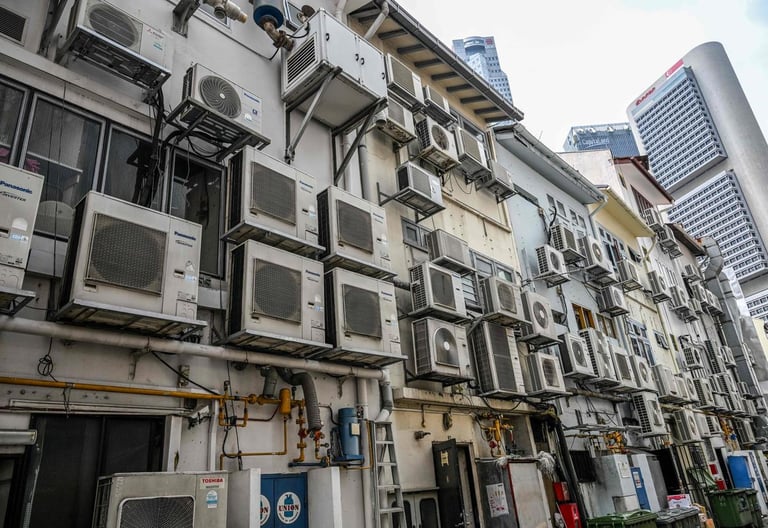


Active chilled beams and other alternative cooling technologies are being deployed in projects like Paya Lebar Green and the Tuas harbor maintenance building, delivering substantial energy savings of 30% or more compared with conventional cooling.
These ACT deployments, including Paya Lebar Green offices and Tuas port authority facilities, demonstrate around 30%+ reductions in energy demand versus traditional air conditioning.
Despite clear energy benefits, adoption faces cultural and behavioral hurdles as people are accustomed to cooler indoor temperatures and may resist higher setpoints.
ACTs can lower operating costs but require higher upfront installation costs, and they have yet to surpass the efficiency of vapor-compression systems.
Hybrid cooling, raising room temperatures to about 25.5–27C and using fans, remains the most popular alternative method despite comfort and mindset barriers.
Passive radiative cooling and hybrid cooling with warmer setpoints are highlighted as viable options for reducing energy use.
Radiant cooling circulates water cooled to 14–18C through pipes or panels to absorb heat from occupants and objects, lowering ambient temperatures.
Passive displacement cooling uses ceiling coils and natural airflow to cut fan use and energy consumption.
Singapore is pushing cooling alternatives to reduce energy use and emissions, aiming for net-zero by 2050 and expanding ACT adoption amid climate-driven cooling demand.
Experts note that no alternative cooling method yet matches vapor-compression in efficiency, though predictive controls and smarter temperature management could boost performance.
Summary based on 4 sources
Get a daily email with more World News stories
Sources
Phys.org • Nov 1, 2026
'Air-con nation' Singapore eyes alternatives to cool down
The Japan Times • Nov 1, 2026
‘Air-con nation’ Singapore eyes alternatives to cool down