Climate Change Added 1.6°C to Indonesia’s Fires as Blazes Scorched 2.88 Million Hectares
November 12, 2026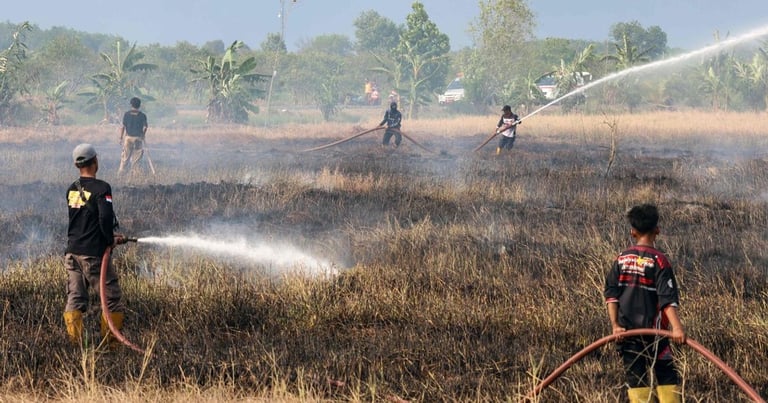

A World Weather Attribution report found that human-caused climate change added about 1.6°C to temperatures during Indonesia’s 2026 fire season, intensifying fires from August to October even as El Niño remained the main driver of exceptionally dry conditions.
El Niño cut rainfall by about half from July to October, while climate change reduced it by roughly 15%; the dry spell overlapped with the region’s June-to-October dry season.
The conditions were stark in September, which was Indonesia’s fifth-driest since 1991, with below-normal rainfall across about 84% of the archipelago.
The fires were fueled by human-set blazes on peatlands drained decades ago for plantations, with drought helping them spread and climate change making fire weather hotter and drier.
Researchers said decades of deforestation and peatland drainage for agriculture, mining and logging have left Indonesia’s landscapes more vulnerable to fires.
Nusantara Atlas data showed fires affected nearly 2.88 million hectares from January through October 2026, including almost one million hectares in October alone; that total was about 18 times the size of London.
The estimated area burned grew by nearly one million hectares in a month, while Indonesia’s government had neither confirmed nor rejected the estimate nor released its own total since July.
The fires caused more than 400,000 respiratory infections in Indonesia, while haze prompted school closures in Malaysia, disrupted flights and contributed to a 20% rise in Singapore hospital emergency visits for potentially haze-related conditions.
A Greenpeace-led report recorded more than 17,800 haze-source points in 23 Indonesian districts between August and October, including 2,270 inside 264 oil palm concessions and 2,938 inside 143 pulpwood concessions.
Researchers said wildfire-triggering conditions are increasingly predictable, creating opportunities to restore peatlands, protect forests and reduce deforestation.
They also urged raising water tables in peatlands and adopting land-management practices that reduce reliance on illegal slash-and-burn methods.
Researchers warned that climate change amplifies fire danger during El Niño years and called for lower emissions, a rapid transition away from fossil fuels and stronger protections for forests and peatlands.
Summary based on 6 sources
Get a daily email with more Science stories
Sources
Yahoo News • Nov 12, 2026
Climate change made Indonesian fires more severe, scientists say
Phys.org • Nov 13, 2026
El Niño mostly to blame for Indonesian wildfires: Research
NHK WORLD • Nov 13, 2026
Report: Climate change worsened Indonesia wildfires
The Straits Times • Nov 12, 2026
Climate change’s heat and El Nino’s drought worsened Indonesia haze: Study