AI Images Flood the Internet, but Labels Can’t Prove What’s Real
November 13, 2026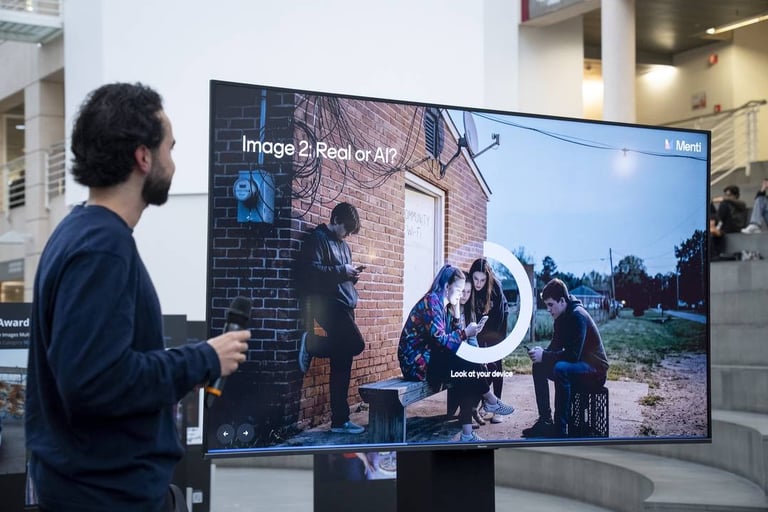

AI-generated images are flooding the internet: Google said its Nano Banana model had created more than 50 billion images by May 2026, while OpenAI said ChatGPT generates about 3 billion images a week.
As synthetic images become more realistic, people often cannot tell them from authentic photographs just by looking, and a Geneva panel and photographers warned that labels alone cannot establish whether an image is truthful.
Research underscores the challenge: 57 per cent of 401 US consumers could not identify whether images were AI-generated, while a Microsoft study of more than 12,500 participants found just 62 per cent accuracy.
Even disclosures are inconsistent: an AI Forensics investigation found proper labels on only half of TikTok’s AI content and 23 per cent of Instagram’s, while just 24 per cent of respondents in a Reuters Institute survey said they had seen an AI label on a news website or app.
A policy paper prepared for the World Standards Cooperation says jurisdictions disagree on what content must be labelled, who is responsible, how disclosure should work and what penalties apply, despite growing support for transparency.
There are no binding worldwide rules; since 2 August 2026, EU transparency rules have required machine-readable marks on AI-generated content and disclosures for deepfakes, while China and India also require forms of labelling, and Switzerland has no AI-specific law yet.
The paper’s authors point to cryptographic signatures from cameras as one possible way to strengthen image provenance, but stress that tracing an image’s origin does not prove its contents are true; context, corroboration, journalism, forensic analysis, trusted institutions and human judgement still matter.
Newsrooms and the Giga Photo Award therefore use human checks alongside tools, including metadata reviews, reference-image comparisons and fact-checking; Le Temps does not accept AI-generated pictures.
Photographers say the spread of synthetic imagery is eroding confidence in pictures: Hannah Reyes Morales described photography as a human practice rooted in observing the real world, said AI has increased photojournalism’s value, and ECAL’s Clément Lambelet questioned whether trust can be rebuilt.
Summary based on 1 source
Get a daily email with more AI stories
Source

Geneva Solutions • Nov 12, 2026
Can a label make an AI-generated photo trustworthy? Geneva-based standards organisations weigh in