China Pushes Universal AI Education as Vietnam Prepares to Bring AI Lessons to High Schools
November 16, 2026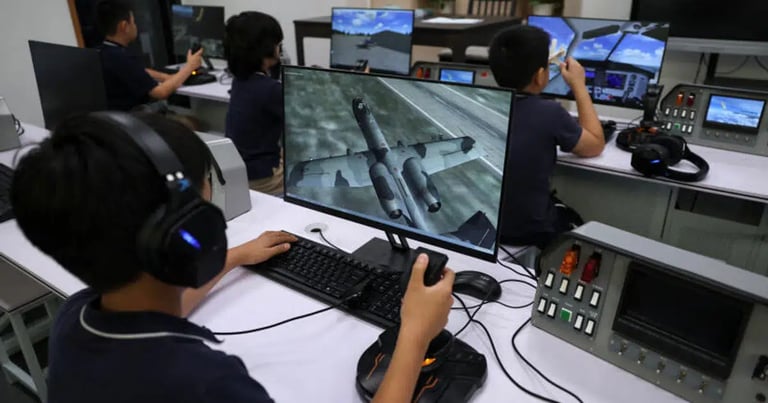

China is pushing to make AI literacy universal among schoolchildren by 2030, with nearly half of its provinces and municipalities already adopting binding education plans.
The rollout is ambitious but uneven: despite coordinated provincial plans and ministry encouragement since 2024, Reuters found little agreement on what AI literacy means or how schools should teach and measure it.
Some requirements are already specific: Shanghai mandates at least 30 hours of AI skills instruction per grade, while some regions plan to add AI literacy to school entrance exams by 2027.
In Beijing, Beijing New Talent Academy teaches AI, robotics and programming, aiming to make AI an everyday learning and creative tool for most students rather than simply training future specialists.
Thirteen-year-old Peng Gaodi said he has built more than 200 apps with AI, illustrating the school’s emphasis on hands-on creation.
Elsewhere, a rural high school in Anhui uses personalized AI-generated lessons and AI agents to help offset a shortage of qualified teachers; its headmaster says admission rates to university rose from below 60% to 90%, a claim Reuters could not independently verify.
The educational effects remain uncertain: one study of nearly 27,000 teenagers linked AI use to higher homework scores but lower monthly exam scores, while a survey of more than 320,000 pupils raised concerns about dependence and weaker cognitive skills among frequent users; neither study established causation.
The investment is substantial, with procurement records showing at least $31 million spent on classroom equipment, training and platforms in the past year, though Reuters said the actual total is likely higher because spending is spread across local budgets.
Reuters contrasted China’s coordinated push with the US approach, which it described as relying on non-binding guidance and lacking dedicated funding.
The article also frames AI education as a priority for Vietnam, arguing it should build high-quality human resources who can use AI while applying critical thinking, creativity and technological mastery to develop technology and solve practical problems, in line with Resolution 57-NQ/TW.
Hanoi plans to introduce AI education for all high-school and continuing-education students from the 2026–2027 school year, with 12 lessons each year.
Summary based on 8 sources
Get a daily email with more AI stories
Sources

ET Telecom • Nov 16, 2026
Inside China's drive to build an AI-native generation
U.S. News & World Report • Nov 16, 2026
Inside China's Drive to Build an AI-Native Generation
TNW | China • Nov 16, 2026
China wants every pupil AI-literate by 2030, a Reuters investigation finds
The Business Times • Nov 16, 2026
Inside China’s drive to build an AI-native generation