IBM, NVIDIA and Fermilab Join Forces to Build a Scalable Quantum-Computing Platform
November 16, 2026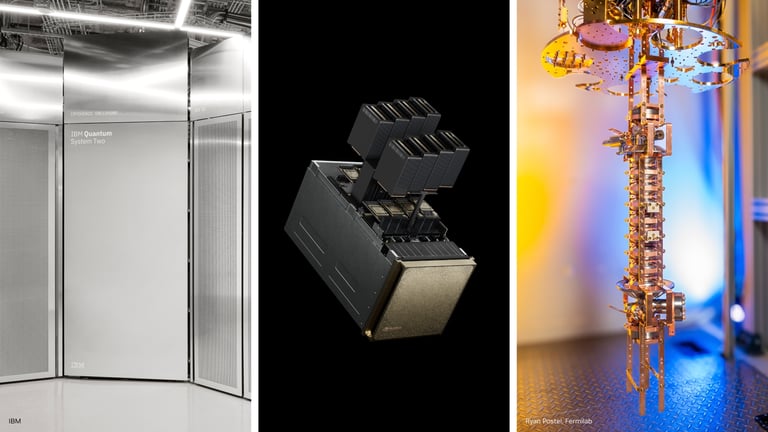


IBM, NVIDIA and Fermilab plan to build a modular quantum-computing co-design platform, combining NVIDIA DGX B200 systems with IBM quantum computers to study how quantum processors and classical computing can scale together.
The platform will support research into error-correction codes, decoding algorithms and quantum-classical applications, drawing on Fermilab’s expertise in high-energy and nuclear physics and quantum error correction.
Researchers will first model communication between quantum modules, examining link errors, latency and feedback to inform the development of physical quantum interconnects.
In a later phase, Fermilab’s SQMS Center intends to integrate ultracoherent superconducting cavities and explore their use as quantum memories, entanglement buffers and tools for bosonic error correction.
Fermilab chief technology officer and SQMS director Anna Grassellino said the initiative would help build capabilities and a research community for a potential future Department of Energy quantum-computing user facility.
NVIDIA’s TCBP-JOBS decoder, available in the CUDA-Q QEC 0.9.0 library, accelerated one error-correction computation from 12 weeks to 45 minutes; the reported maximum speedup of 13,000 times applied to specified benchmarks, not all workloads.
NVIDIA Research reported logical error rates comparable to Tesseract’s and up to 4.5 times lower on the largest codes, with results varying by workload and comparison.
In separate research, IBM, RIKEN and NVIDIA used a quantum-classical workflow to simulate an Fe4S4 iron-sulfur cluster, running circuits of up to 4,000 two-qubit operations on 72 qubits and collecting five million samples.
IBM and RIKEN, using NVIDIA accelerated computing, modeled protein-ligand complexes containing up to 12,635 atoms—more than 40 times the previous 303-atom quantum-classical benchmark—and the work was named a finalist for the 2026 ACM Gordon Bell Prize.
NVIDIA is extending the open-source Slurm workload manager to schedule quantum processors alongside CPUs and GPUs, while IBM, NVIDIA and Pasqal worked with the open-source community on QRMI, a vendor-neutral interface for managing shared QPU resources within familiar computing workflows.
NVIDIA said QRMI and QDMI support will let QPU builders reuse integrations across deployments; listed adopters include Alice & Bob, IBM, IQM, Pasqal, Quantinuum and MQSC, with Slurm 26.11 targeted for release later in November 2026.
Summary based on 8 sources
Get a daily email with more Tech stories
Sources

TNW | Quantum-tech • Nov 16, 2026
Nvidia teams up with IBM and Fermilab on a quantum codesign platform

Unite.AI • Nov 16, 2026
NVIDIA, IBM and Fermilab Plan Modular Quantum Computing Platform