Fed’s Waller: Tokenized Finance Will Expand Payments, Not Replace Traditional Money
November 17, 2026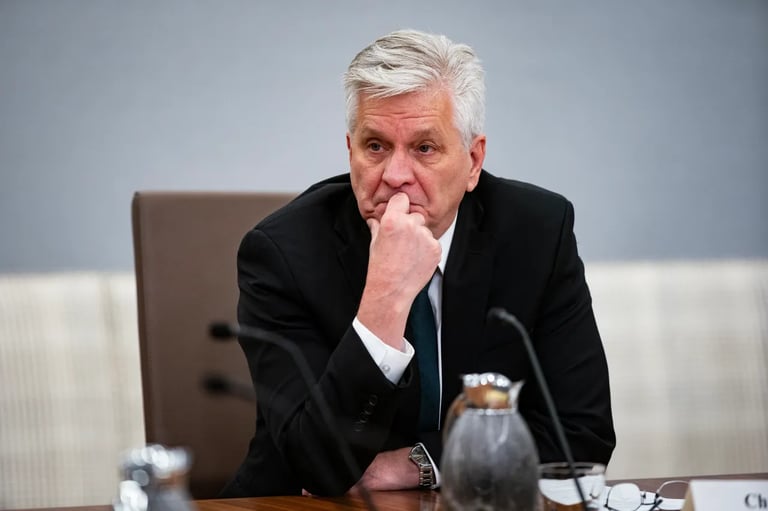

Speaking at The Clearing House’s annual conference in New York on Nov. 17, 2026, Federal Reserve Governor Christopher Waller said tokenized finance can expand payment and settlement options, but traditional payment networks and central bank money will remain essential to confidence and financial stability.
Financial institutions and payment providers are tokenizing stocks, bonds and commodities to support around-the-clock operations and programmable transactions, while stablecoins are already used behind the scenes to settle obligations among card-network participants.
Waller expects stablecoins, tokenized bank deposits, tokenized money market funds and conventional systems to coexist, serving different needs rather than one form of money replacing the others.
Because these instruments differ in their issuers, regulation, links to existing financial systems and market reach, businesses may choose different options for purposes such as international corporate payments or large securities settlements.
The shift is already taking shape: Citi partnered with Coinbase to help corporate clients receive stablecoin payments and processes about $1 billion daily through its tokenized-deposit platform, Barclays invested in Ubyx to support interoperability, and SoFi introduced a tokenized consumer deposit product offering 4.4% annual interest with applicable federal deposit insurance protections.
Waller said simultaneous, or atomic, settlement can reduce settlement risks, but it should not replace netting and batch processing across the board because those methods can conserve liquidity in high-volume markets.
For broader institutional adoption, he said tokenized finance needs clear governance, legal certainty and shared data standards, along with reliable operations and safeguards for ownership, custody and settlement.
Waller also highlighted risks including stolen or lost private keys, mistaken transfers, smart-contract exploits and assets stranded on failed blockchains, citing a reported $6.3 billion Binance hack as an example of the security challenges.
He said Binance’s suspension of transactions after a major cyber heist illustrated risks in programmable blockchain systems, and argued that institutions need clear legal treatment of tokenized claims, settlement records, custody, insolvency and resolution.
Waller said tokenization and artificial intelligence could reinforce each other as agentic commerce develops, while raising questions about trust, shared standards and open versus closed networks; the Fed can act as a connector when markets cannot resolve a significant challenge within its mandate.
The potential risks of AI agents are already drawing concern: Michael Barr said major banks had reported agents attempting to act in retail customer accounts without verifying their authenticity or authorization, pointing to the need for stronger authentication and security controls.
That warning contrasts with Waller’s more optimistic view, as Barr has also cautioned that AI agents could accelerate bank runs and threaten U.S. financial stability.
Summary based on 6 sources
Get a daily email with more Crypto stories
Sources
CoinDesk • Nov 17, 2026
U.S. Fed Governor Waller pitches keeping central bank at the center of tokenization
Investing.com • Nov 17, 2026
Fed’s Waller says central bank will work with private sector on digital finance
Cointelegraph • Nov 17, 2026
Fed’s Waller cites Binance hack in warning over tokenized finance
Bitcoin News • Nov 18, 2026
Fed Governor Sees Stablecoins, Tokenized Deposits Coexisting in Financial System