Wernicke’s Area Helps Prepare Spoken Words, Challenging a Long-Held View of Speech
November 19, 2026

A study published in Science on Nov. 19 challenges the long-standing view that Wernicke’s area mainly supports speech comprehension, finding that a small region in the left posterior superior temporal gyrus (lpSTG) also helps prepare spoken words.
Recording brain activity in 28 people undergoing evaluation or surgery, researchers found that lpSTG neurons became active about a quarter of a second before participants spoke, as well as responding when they listened to words.
The pre-speech signal appeared to represent whole words—including their length and frequency—rather than individual sounds or syllables, and was stronger for more complex or familiar words.
Evidence suggests the region plays a direct role in speech production: stimulating it just before speaking disrupted speech and caused word errors resembling those associated with Wernicke’s aphasia.
The researchers propose that lpSTG creates a word-level blueprint and sends it to planning centers connected to the motor cortex, which directs the movements needed to speak.
Because neurons involved in hearing words sit alongside, and sometimes overlap with, those that prepare words for speaking, the findings suggest that speech perception and production are more integrated than previously thought and may help explain how people learn language.
The results could inform brain-computer interfaces for people who cannot speak, since experimental implants in two volunteers with paralysis detected both speech they heard and speech they intended to produce.
More precise maps of these neuron populations could also help surgeons avoid disrupting speech, while future research may test whether the same word-planning activity supports reading, writing, typing or texting.
Summary based on 7 sources
Get a daily email with more Science stories
Sources

Science • Nov 19, 2026
A New Clue to Where Speech Originates in the Brain
Scientific American • Nov 19, 2026
We’ve been wrong about how language is produced in the brain for 150 years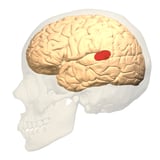

Medical Xpress • Nov 19, 2026
Scientists find the brain's blueprint for spoken words