Volcanic Deposits Found Near Challenger Deep Raise Mysteries About Eruptions at Extreme Depths
November 23, 2026

A research team using the Jason/Medea remotely operated vehicle found evidence of volcanic eruptions at extraordinary depths near Challenger Deep, the deepest known point of the seabed.
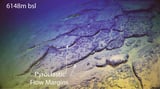
Across three sites spanning about 60 miles (100 kilometers), cameras recorded pancake-like rock formations, and recovered samples contained volcanic glass and textures characteristic of pyroclastic flows—fast-moving mixtures of hot rock, ash and gas.
The thin, layered deposits are the deepest pyroclastic deposits reported on Earth; the findings were published November 23 in Frontiers in Earth Science.
The deposits sit about 100 kilometers from the trench, much closer to the plate collision than volcanic deposits typically found in subduction zones, where magma commonly forms island arcs hundreds of kilometers away.
That location is especially puzzling because it lies close to the meeting point of tectonic plates, above mantle generally considered too cool to melt; the Mariana Trench formed as the Pacific plate began descending beneath the Philippine Sea plate around 52 million years ago.
At the deposits’ depth, water pressure is about 592 times atmospheric pressure at Earth’s surface, leaving scientists unsure whether the event was explosive in the usual sense, since pressure can prevent magma gases from expanding.
One proposed explanation is that water released from the magma formed a supercritical fluid—a state between liquid and gas—that restrained explosive expansion while helping create the dense, fragmented deposits.
Researchers have not located the eruption site or identified the rocks’ source; evidence that fragments fused into hard rock suggests hot flows traveled only a limited distance before cooling.
The forearc ridge also shows a striking east-west contrast: the eastern section exposes mantle rocks and traces of crust about 50 million years old, while the western section is dominated by younger volcanic rocks.
Researchers suggest the eastern forearc is stretching through mechanical pulling, while the western segment is extending as magma is added, but further sampling and dating are needed to test the idea.
Robert Stern and colleagues propose that the Pacific Plate may bend especially sharply as it descends beneath the Mariana Plate, potentially helping create Challenger Deep’s exceptional depth and bringing volcanism closer to the trench.
The team hopes to return to Challenger Deep to locate the eruption sites and investigate depths beyond Jason/Medea’s reach; the vehicle can descend to about 6.5 kilometers, short of the trench’s roughly 11-kilometer bottom.
Summary based on 9 sources
Get a daily email with more Science stories
Sources
Science • Nov 23, 2026
World's Deepest Explosive Volcanic Eruption Just Discovered in an Oceanic Trench
Phys.org • Nov 23, 2026
Robot submarine exploring world's deepest ocean trench finds unprecedented volcanic activity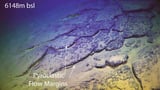
Popular Science • Nov 23, 2026
Mysterious volcanic rock discovered in the Mariana Trench