New Police Reform Bill Introduces Independent Watchdog for Facial Recognition Use
November 4, 2026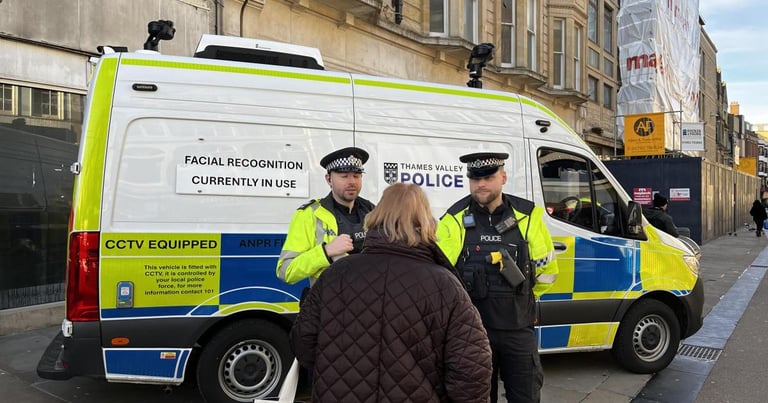


The UK Home Office plans to expand live facial recognition (LFR) for immigration enforcement, potentially using cameras at transport hubs, ports, travel routes and major events to find people suspected of immigration breaches.
The proposed watchlists could cover civil immigration cases—not just criminal matters—including people who have overstayed visas, entered without leave or breached visa conditions.
The programme has moved into a formal delivery phase after three trials at Holyhead port between November 2025 and February 2026, which focused on travellers from Ireland subject to deportation orders or wanted for immigration-related offences.
Further trials and deployments are under consideration, but the Home Office has not confirmed locations or a national schedule, and has not explained what it means by places with “heightened community sensitivity.”
In a deployment, cameras would compare images captured in a designated area against an approved watchlist; a possible match would alert trained staff for identity checks, with the system itself neither confirming a violation nor deciding on detention.
The Home Office says LFR would support existing immigration powers rather than create new ones, and that deployments should be overt, authorised in writing and used only when necessary and proportionate, with less intrusive alternatives and community impact considered.
The Home Office says decisions should take account of factors such as location, scale and effects on individual rights, and that biometric data from people who do not trigger an alert will be deleted.
No one under 18 will be placed on watchlists, although concerns remain about age-estimation technology and past cases in which child migrants were misidentified as adults.
The Home Office says independent testing by the National Physical Laboratory found no statistically significant demographic bias in the technology’s operational performance.
A public consultation drew 12,584 emails, 588 distinct responses and 1,261 online forms, with participants raising concerns about data security, retention, unauthorised access, repurposing and the possible chilling effect on protest and assembly.
Civil-liberties and migrant-rights groups have questioned the system’s privacy, transparency, accountability and fairness, while arguing that the legal framework and independent oversight may be inadequate.
The government points to oversight by the Biometrics and Surveillance Camera Commissioner and the Information Commissioner’s Office, but commissioner William Webster said he had not been consulted and that immigration use falls outside his remit.
Summary based on 12 sources
Get a daily email with more World News stories
Sources

The Guardian • Nov 4, 2026
UK to deploy facial recognition in biggest-ever immigration crackdown
BBC News • Nov 4, 2026
New laws to regulate use of live facial recognition cameras
Unite.AI • Nov 4, 2026
UK Home Office Sets Out Police Facial Recognition Oversight Plans