Hamburg-Berlin Rail Project Faces Indefinite Delay Due to Harsh Winter Conditions
February 16, 2026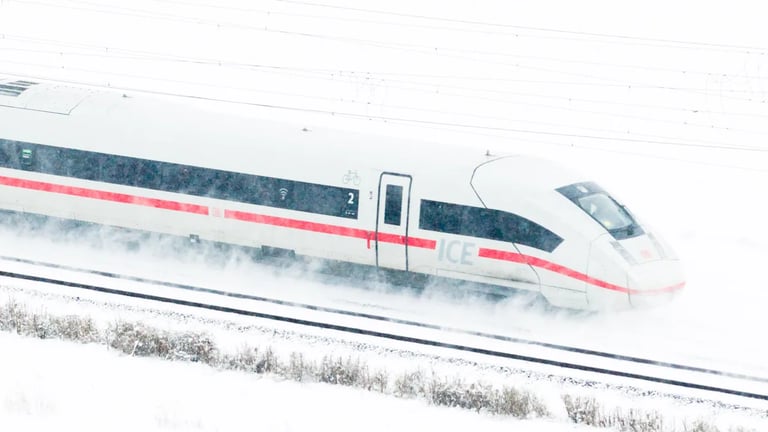

The company plans to significantly increase on-site personnel as soon as work can resume to accelerate progress.
The Hamburg–Berlin rail rehabilitation is delayed indefinitely, with completion no longer expected by the end of April due to severe winter weather that has halted key work.
Frozen cables, channels and ground frost up to 70 centimeters are preventing essential signaling and track infrastructure installation, making the originally planned end-April target unattainable.
Initially, the reopening target was April 30, but winter conditions have caused an indefinite delay, particularly impacting the installation of new signaling cables.
InfraGO acknowledges the setback and emphasizes transparency about the schedule while ensuring detour routes remain operational for passengers and freight.
The corridor handles roughly 30,000 long-distance passengers and about 470 trains per day, underscoring the rationale for the broad modernization spanning more than 40 busy routes by 2030.
Deutsche Bahn and InfraGO aim to submit a new operational concept by mid-March to address delays and restart constraints on the vital route.
Rail passenger groups view the delay as a major setback, with concerns over lost riders and criticism that the timetable may have underestimated the project’s complexity.
During the closure, long-distance services are rerouted via Stendal and Uelzen, increasing travel times by about 45 minutes and reducing service frequency, with some intermediate stops canceled.
The 280-kilometer corridor, central to Germany’s rail network, has been closed since August 2025 for a comprehensive modernization serving about 30,000 daily long-distance passengers and around 470 trains per day before the delay.
DB stresses ongoing efforts to reduce the backlog and stay as close as possible to the planned reopening date, contingent on better weather.
The core delay stems from cable trenching work for signaling systems, with the extended closure and complexity surpassing initial expectations on the 280-kilometer route through five states.
Summary based on 6 sources