Amateur Mycologists Drive Fungal Conservation Efforts Amid Growing Ecological and Economic Significance
February 17, 2026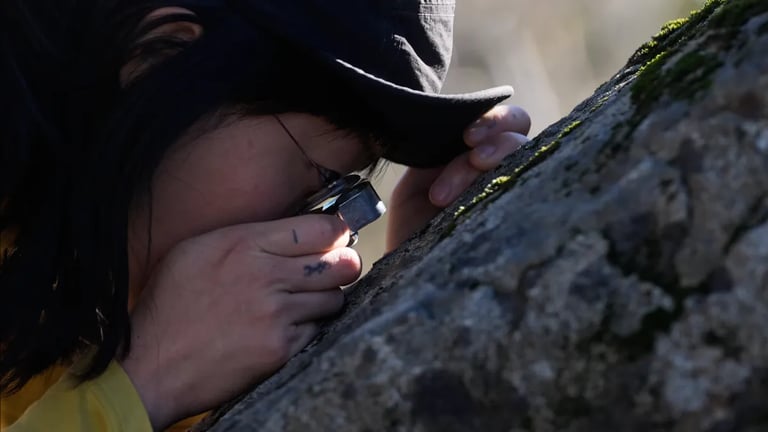

Amateur mycologists and citizen scientists, including groups like the California Lichen Society, are essential for documenting fungal diversity, discovering rare species, and guiding conservation priorities through field forays and data collection.
Fungi play critical roles as decomposers, food sources, medicines, and contributors to carbon storage, with an estimated 2.5 million species and a global economic contribution of about $54 trillion.
A growing community of scientists and amateur nature enthusiasts is increasing emphasis on fungi conservation, highlighting their immense ecological and economic importance despite historical neglect.
The article emphasizes the need for ongoing funding, research, and policy attention to protect a largely unseen but fundamentally important kingdom of life.
Historical context is provided by examples like the 1990s Northwest Forest Plan, which linked forest ecosystem protection to safeguarding associated fungi and other species.
Despite missing the target on this particular foray (the Manzanita butter clump was not found), researchers emphasize that fieldwork is inherently uncertain and that exploration itself advances knowledge and awareness of fungal diversity.
Expert voices emphasize that much of fungi life is hidden in mycelial networks, with mushrooms appearing under specific conditions, making field observation and long-term monitoring crucial.
Fungal conservation in the United States lags behind other regions, with only two fungal species protected under the Endangered Species Act, though momentum is growing via community science projects and state-level protections.
Conservation efforts in the U.S. are evolving, inspired by broader biodiversity programs and well-known cases like the Northwest Forest Plan, which recognized that protecting dependent species requires protecting whole ecosystems.
Closing note: Despite not finding the sought-after Manzanita butter clump, the day underscores the value and enjoyment of fieldwork in advancing fungal science and conservation.
Globally, a significant portion of fungi are at risk, with the IUCN Red List indicating 411 of 1,300 evaluated species are threatened; in the U.S., protection is still limited though slowly expanding through state and federal actions.
Case study of fieldwork in California shows the challenges and rewards of foraying for rare species like the Manzanita butter clump, illustrating both the excitement of discovery and the resilience required in mycological research.
Summary based on 4 sources
Get a daily email with more Science stories
Sources
Yahoo News • Feb 17, 2026
To afficionados, fungi are freaky, mystical and overlooked. They're helping scientists learn more
AP News • Feb 17, 2026
People excited about fungi are helping scientists learn more | AP News
The Seattle Times • Feb 17, 2026
To aficionados, fungi are freaky, mystical and overlooked. They’re helping scientists learn more
NBC4 Washington • Feb 17, 2026
To aficionados, fungi are freaky, mystical and overlooked. They're helping scientists learn more