Mayo Clinic Pioneers U.S. Magnetic Nanoparticle Hyperthermia for Cancer Treatment
February 17, 2026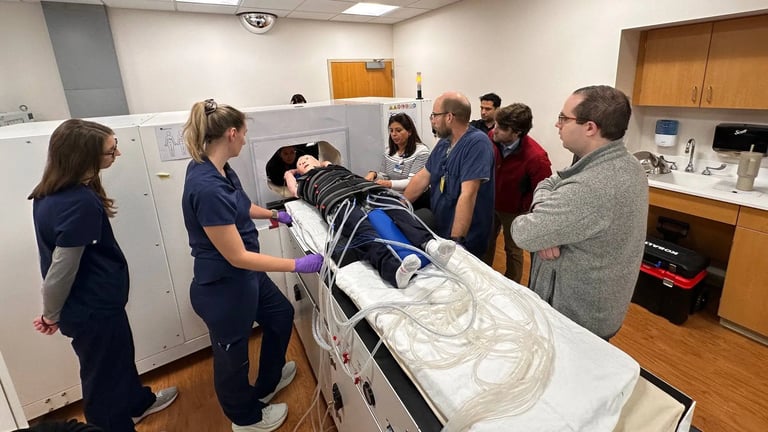

The machine is used for metastatic solid tumors outside the brain, allowing treatment of multiple deep-seated tumors simultaneously, and is designed to heat tumors selectively while monitoring patient body temperature.
The approach builds on historical heat therapy in cancer, leveraging nanoparticle-mediated heating to address past reliability and safety limitations and reintroduce hyperthermia more precisely.
Mayo Clinic in Rochester, Minnesota, partnered with New Phase Ltd. to install the first magnetic nanoparticle–mediated hyperthermia system in the United States for cancer research, enabling a heat-based approach to treating cancer.
The system, an electromagnetic induction device surrounding the torso, heats iron oxide–containing nanoparticles delivered IV to accumulate in tumors, with a controlled temperature cap of 50 degrees Celsius and cooling to prevent overheating.
Installation was completed in November 2025 and the first U.S. patient was treated in December 2025 as part of a clinical trial focusing on metastatic solid tumors outside the brain.
The collaboration aims to expand treatment options for metastatic cancers resistant to multiple lines of therapy, potentially improving patient outcomes if efficacy is demonstrated.
Historical context notes that earlier ultrasound-heated water bags in the 2000s faced reliability and comfort issues, motivating the shift to nanoparticle-based hyperthermia.
Researchers view hyperthermia as a potential fourth leg of cancer treatment, either as a companion to radiation or as a means to reduce radiation doses and overcome radiation-resistant tumors.
Studies are evaluating hyperthermia both alone and in combination with other treatments, with the aim of slowing or halting tumor growth and potentially enabling lower radiation exposure.
The goal is to establish hyperthermia as a complementary modality that could improve outcomes for patients with radiation-resistant cancers.
Lead clinicians, including Mayo Clinic physicians Scott Lester, M.D., and Sean Park, M.D., Ph.D., emphasize the investigational nature and potential of hyperthermia as a cancer treatment adjunct.
Institutional context places the work in Mayo Clinic’s Radiation Oncology Department in Rochester, with the program noting a financial interest in the technology and that resulting revenues will support its not-for-profit mission.
Summary based on 3 sources
Get a daily email with more Science stories
Sources
Mayo Clinic News Network • Feb 17, 2026
Mayo Clinic installs first magnetic nanoparticle hyperthermia system for cancer research in the US