Rutgers Study: Offshore Clam Farming Promises Sustainable Seafood Boost for New Jersey
February 17, 2026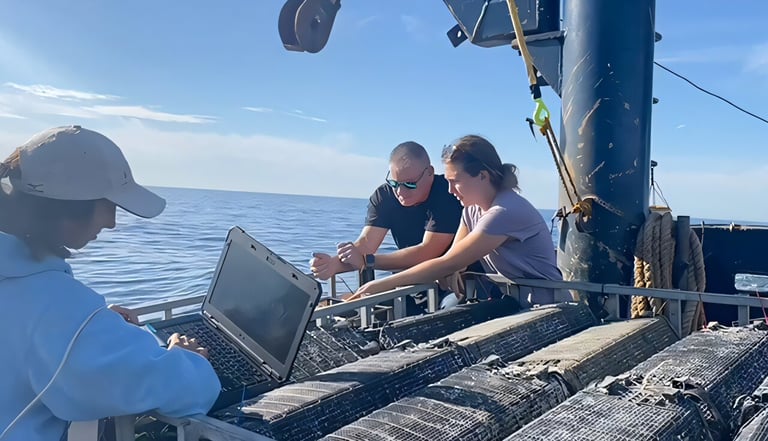

Funding came from the National Oceanic and Atmospheric Administration, with a partnership involving commercial fishing companies to ensure the work has real-world applicability.
Rutgers researchers emphasize collaboration with commercial fishing partners to translate findings into practical, market-ready offshore aquaculture solutions.
Cages were engineered to protect clams from predators, minimize sediment buildup, and keep them elevated off the seabed to improve water flow and meat quality, resulting in high-quality product suitable for steam or raw consumption.
Rutgers marine scientists led by Daphne Munroe demonstrated that Atlantic surfclams can be farmed offshore in the open ocean, testing growth and survival in ocean cages off New Jersey and finding spring clams grew faster with higher survival than fall clams.
The study, published in the North American Journal of Aquaculture, shows offshore clam farming is viable and could boost New Jersey’s seafood production while reducing pressure on wild clam populations.
Researchers citing challenges include gear durability in harsh weather and navigating regulatory frameworks necessary to scale up offshore clam farming.
The research team includes Laura Steeves, Sarah Borsetti, and Rachel Davitt, reflecting collaboration among Rutgers scientists and international partners.
The results point to offshore aquaculture as productive and environmentally responsible, with potential benefits for local jobs and a more sustainable seafood supply in New Jersey.
Despite promise, hurdles remain, including durable gear for harsh seas and regulatory navigation before commercial-scale offshore farming can be implemented.
The study highlights potential economic benefits for New Jersey’s farming and fishing sectors and the creation of local jobs as part of a broader sustainable seafood strategy.
Offshore aquaculture is framed as a way to meet rising seafood demand, reduce pressure on wild clams, offer cleaner waters, more space, and fewer conflicts with coastal users compared to nearshore farms.
Summary based on 3 sources
Get a daily email with more Science stories
Sources
Phys.org • Feb 17, 2026
Scientists raise 300,000 surfclams offshore, proving open-ocean aquaculture can work
Rutgers University • Feb 17, 2026
Scientists Prove Shellfish Can Be Farmed Far From Shore
Mirage News • Feb 17, 2026
Scientists Prove Shellfish Can Be Farmed Far From Shore