DeepRare: AI-Powered Diagnostic Aid Revolutionizes Rare Disease Detection
February 18, 2026


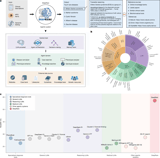
DeepRare relies on a three-tier MCP-inspired architecture: a central LLM-host with memory, specialized agent servers for phenotype/genotype analysis and knowledge retrieval, and outer-tier web-scale medical resources for evidence.
A diagnostic aid named DeepRare analyzes clinical data, genetic information, and literature to generate ranked diagnostic hypotheses for rare diseases, with reasoning tied to verifiable medical evidence.
The scientific context is underscored by references to key studies in rare-disease genetics, clinician workflows, and AI-assisted diagnostics.
DeepRare connects symptom patterns to underlying causes through specialized tools and knowledge sources, aiming to improve accuracy in identifying rare diseases.
The piece highlights the diagnostic odyssey for roughly 300 million people with rare diseases, often spanning five years or more with misdiagnoses and unnecessary treatments.
Ten physicians reviewed 180 cases, finding a 95.4% average reference accuracy for DeepRare’s reasoning and evidence chains, indicating high reliability of the outputs.
Experts evaluating DeepRare’s reasoning and references reported correct information 95% of the time, supporting the tool’s clinical relevance.
The piece is authored by Timo Lassmann and notes affiliations with The Kids Research Institute Australia and the UWA Centre for Child Health Research, while acknowledging Anthropic’s Claude Opus 4.5 used to prepare the News & Views feature.
The work is situated within the broader literature, citing prior Nature papers and reviews to frame the significance of AI-assisted diagnosis.
Robustness is demonstrated via cross-centre evaluations, specialty-wide analyses, performance on tail-end disease cases (Recall@1 > 0.8 for about one-third of rare tail cases), and ablations; DeepRare is deployed as a web-based diagnostic copilot for clinicians.
The article indicates access to Nature journals and provides DOI references, signaling a scholarly feature rather than general-audience content.
Evaluation spans multiple datasets totaling thousands of cases across in-house and public sources, covering hundreds of diseases and several specialties, with some cohorts including whole-exome sequencing.
Summary based on 3 sources
Get a daily email with more AI stories
Sources
Nature • Feb 18, 2026
An agentic system for rare disease diagnosis with traceable reasoning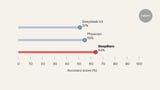
Nature • Feb 18, 2026
AI succeeds in diagnosing rare diseases
Inside Precision Medicine • Feb 18, 2026
AI-Based Tool Helps Diagnose Rare Diseases