Historic Antarctic Core Drilling Unveils 23-Million-Year Climate Record, Impacts on Future Sea Levels
February 18, 2026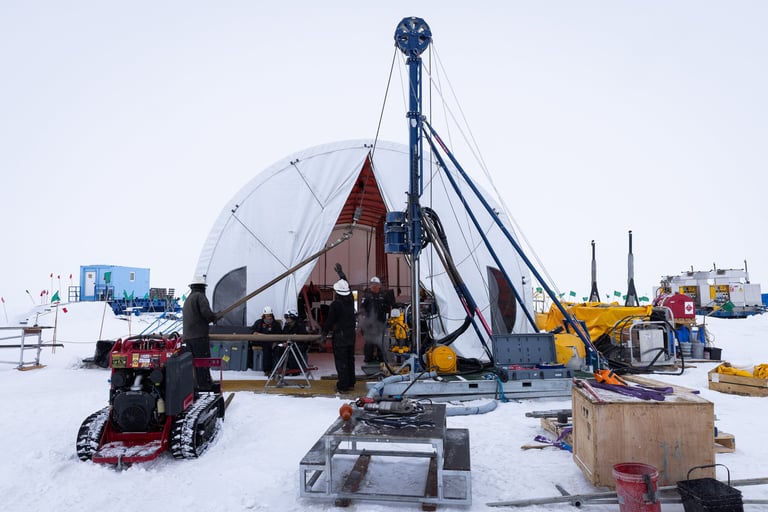

Researchers used marine microfossils for preliminary dating and plan to apply multiple techniques through a ten-country collaboration to refine the sediment timeline.
A multinational team drilled a 228-meter-long sediment core beneath Crary Ice Rise in West Antarctica, the longest ever retrieved from under an ice sheet, revealing a 23-million-year climate record.
The expedition ties into broader debates on climate policy, sea-level rise, and ice-sheet stability in a warming world.
Samples from the 228-meter core are en route to New Zealand for analysis by researchers across ten countries to determine past temperatures and melting conditions relevant to future sea-level rise.
Certain sediment layers contain shells and marine remnants, indicating periods when the region was open ocean and the ice sheet was temporarily absent.
The operation involved 29 scientists and support personnel living in tents, with major logistical support from Antarctica New Zealand and the U.S. NSF, reflecting extensive cross-continental cooperation.
The expedition site is remote, underscoring the significant logistical and technical challenges of Antarctic drilling and core collection.
The core provides a 23-million-year environmental record, including warmer-than-present periods, offering crucial data on how the ice sheet may respond to warming temperatures and thresholds.
Preliminary dating suggests the record spans the last 23 million years, capturing warmer global climates and informing predictions about ice-sheet retreat under future warming.
The Crary Ice Rise site lies near potential breakup pathways toward the Ross Ice Shelf, about 700 kilometers from the nearest Antarctic station.
West Antarctica holds enough ice to raise global sea levels by several meters if melted, and satellite data show accelerating mass loss amid uncertain tipping-point temperatures.
Findings ground-truth past open-ocean conditions in the region and inform models of the West Antarctic Ice Sheet’s response to future warming, including potential sea-level contributions.
Summary based on 3 sources
Get a daily email with more Science stories
Sources

Nature • Feb 18, 2026
Deepest-ever rock core extracted from under Antarctic ice sheet
Phys.org • Feb 17, 2026
Record-breaking Antarctic drill reveals 23 million years of climate history