Breakthrough in Orbitronics: Chiral Phonons Enable Magnet-Free Angular Momentum Transfer in Quartz
February 23, 2026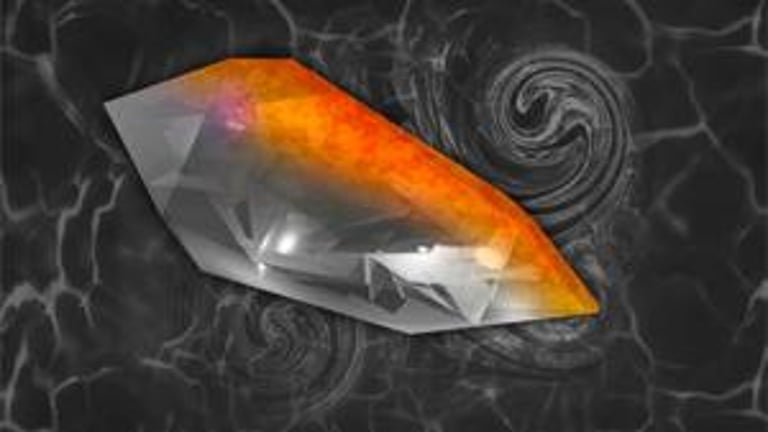

North Carolina State University led the collaborative effort, with partners including the University of Utah, and the work appears in Nature Physics on January 21, 2026; DOI: 10.1038/s41567-025-03134-x.
Traditional methods relied on magnetic materials and charge injection; the new approach eliminates magnets and external voltages, leveraging intrinsic chiral phonon properties.
The approach is expected to extend to other chiral materials such as tellurium, selenium, and certain perovskites, offering lower material usage and longer-lasting orbital angular momentum.
In a Nature Physics paper published January 2026, researchers demonstrate transferring angular momentum from chiral phonons in quartz to electrons without magnets or external voltages, revealing the orbital Seebeck effect as a new mechanism.
The study centers on α-quartz, a chiral crystal whose lattice vibrations (chiral phonons) carry angular momentum and exhibit a magnetic-like effect.
The research advances the understanding of phonon–electron angular momentum transfer and points toward low-power, scalable orbitronic devices for computing and data storage.
To convert the orbital flow into a measurable signal, the team layered metals like tungsten and titanium on quartz, enabling detection of an orbital Seebeck effect.
α-quartz serves as the test platform, with potential applicability to a broader class of chiral materials beyond quartz.
External magnetic fields are used to align the handedness of the chiral phonons, creating a coherent orbital angular momentum flow that drives the orbital Seebeck effect.
The Nature Physics publication on January 21, 2026, details a multi-institution collaboration funded by the U.S. Department of Energy, the U.S. Air Force, the National Science Foundation, and international sources.
By avoiding magnets and scarce metals, the method points to cheaper, more abundant materials for orbitronics and broader practical impact.
Direct magnetism measurements in quartz were conducted at the National High Magnetic Field Laboratory, complemented by laser-based optical analysis to observe changes in reflected light.
Summary based on 4 sources
Get a daily email with more Science stories
Sources
EurekAlert! • Feb 23, 2026
Physicists open door to future, hyper-efficient ‘orbitronic’ devices
Newswise • Feb 23, 2026
Physicists open door to future, hyper-efficient ‘orbitronic’ devices | Newswise
University of Utah Logo • Feb 19, 2026
Physicists open door to future, hyper-efficient ‘orbitronic’ devices - @theU
BIOENGINEER.ORG • Feb 23, 2026
Physicists Unlock Potential of Next-Generation Hyper-Efficient