Pre-Wired Genomes: New Study Reveals Early Embryonic DNA Structure's Role in Development and Disease
February 24, 2026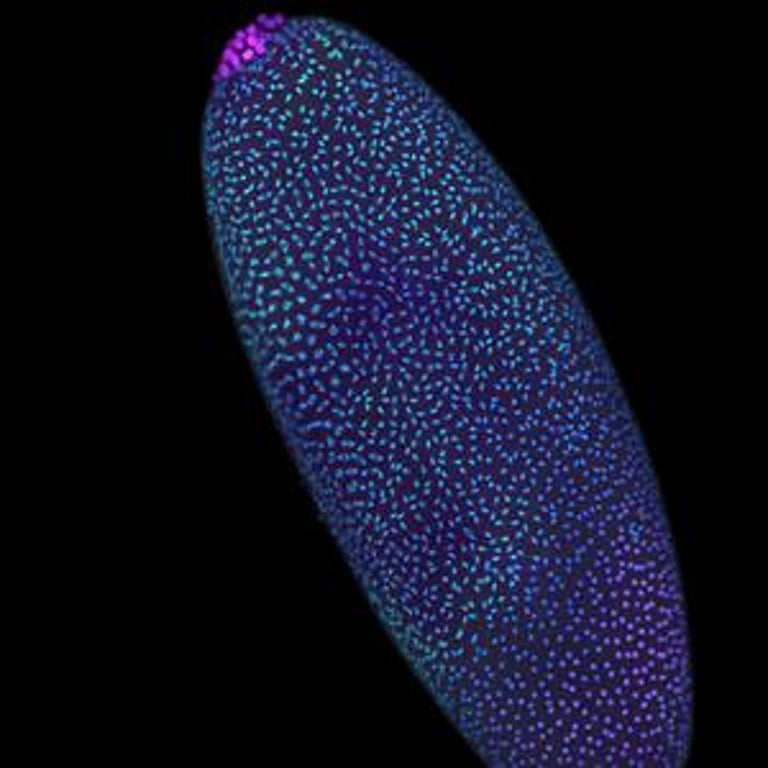

A Nature Genetics study shows the early genome architecture is pre-formed and highly organized before zygotic genome activation, overturning the idea of an unstructured embryonic genome.
The genome’s spatial organization is a pre-emptive, disciplined construction that readies transcription at the moment it’s needed, not a blank slate.
The work, conducted in fruit flies, has broad implications for understanding gene regulation, development, and diseases where DNA folding goes awry.
The research is funded by the Medical Research Council and the Academy of Medical Sciences, aligning with efforts to link genome structure with regulation and disease.
Together, the studies tell a two-part story: early establishment of genome architecture before activation and health consequences when that architecture collapses in humans.
Using Pico-C, researchers mapped the 3D genome in early Drosophila embryos with unprecedented resolution from minimal samples, revealing a modular architectural program of DNA folding.
Pico-C shows DNA folds follow a modular program in early embryos, with 3D loops enabling rapid regulatory inputs during development.
Developed by Professor Juanma Vaquerizas, Pico-C maps genome structure with ten times less material than standard methods.
The pre-formed genome scaffold primes regulatory elements and genes for rapid, accurate expression, with modular loops acting as discrete regulatory units to maintain genomic integrity during rapid divisions.
This pre-wiring before ZGA indicates a developmental foresight encoded in 3D folding that supports imminent transcriptional activity.
Pico-C’s ultra-sensitive method requires only about one-tenth of the input of conventional approaches, enabling detailed chromatin folding studies in early, transient developmental windows and rare cells.
A companion Nature Cell Biology study in human cells shows that removing anchors of the 3D structure can make cells misinterpret structural collapse as a viral attack, triggering innate immunity.
Summary based on 2 sources
Get a daily email with more Science stories
Sources
EurekAlert! • Feb 24, 2026
New technology reveals hidden DNA scaffolding built before life ‘switches on’
BIOENGINEER.ORG • Feb 24, 2026
New Technology Uncovers Hidden DNA Scaffolding Formed Before Life Activates