Record-Sized Coral Colony Discovered on Great Barrier Reef by Citizen Scientists
February 25, 2026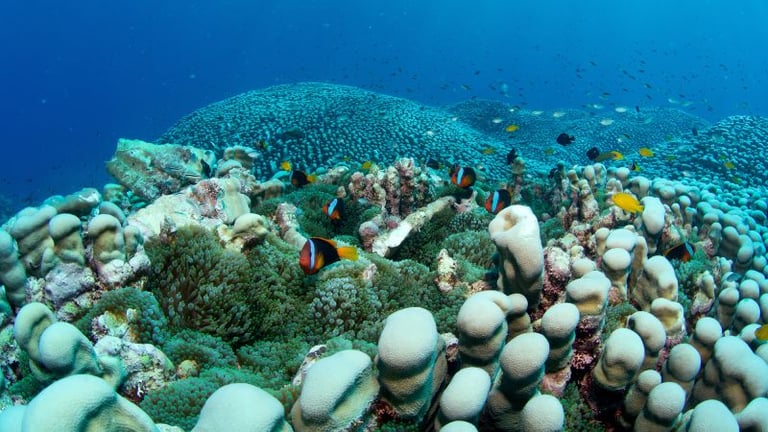


The colony’s appearance resembles a rolling underwater meadow, and researchers note it could be a single ancient coral or multiple coalesced colonies; confirming origin would require extensive genetic sampling.
Sophie Kalkowski-Pope and her mother Jan Pope discovered Pavona clavus late last year, confirming significance with measurements, video, and a 3D model.
A citizen science effort on the Great Barrier Reef led to the discovery of a potentially record-sized Pavona clavus coral colony offshore from Cairns, estimated at 111 metres in length and about 3,973 square metres in area, making it one of the largest colonies documented.
The world’s largest known coral colony on the Great Barrier Reef was identified by a mother-and-daughter team, with measurements confirming roughly 111 meters in length and 3,973 square meters in area.
The find comes amid discussions of potentially reclassifying Pavona clavus as part of ongoing coral taxonomy revisions.
Site conditions include strong tidal currents and relatively low exposure to cyclone waves, with scientists exploring whether these factors contribute to the colony’s large size.
The story aligns with broader citizen-science efforts like Genomic testing and initiatives such as Map the Giants, which track giant coral colonies globally.
The discovery occurs during a period of global and regional coral bleaching tied to rising ocean temperatures, underscoring the importance of reef monitoring and protection efforts.
Researchers used spatial modeling and high-resolution imagery to verify the size and create a 3D representation, enabling future one-to-one comparisons to monitor changes over time.
Experts say 3D mapping and systematic monitoring will help track reef recovery and inform targeted protection for vulnerable areas.
The exact location remains undisclosed to protect the site from disturbance, in line with conservation best practices.
While extremely large coral colonies are rare due to bleaching pressures, Pavona clavus can form very large colonies when conditions permit; the species is uncommon in forming such sizes.
Summary based on 2 sources
Get a daily email with more World News stories
Sources
The Guardian • Feb 24, 2026
Citizen scientists discover a Great Barrier Reef coral giant ‘like a rolling meadow’