Mosquito Evolution: Human Blood Preference Originated 1.8 Million Years Ago with Homo Erectus
February 27, 2026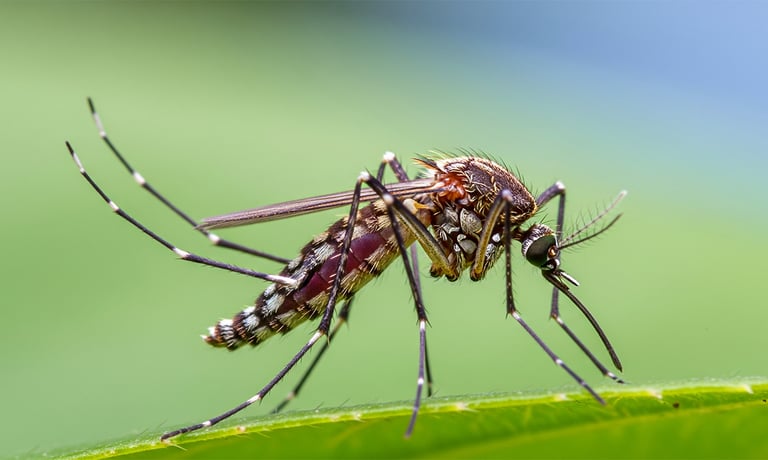

A new genetic analysis suggests some mosquitoes evolved a preference for human blood about 1.8 million years ago, potentially tracing back to Homo erectus.
This shift to human feeding occurred well before anatomically modern humans arrived in Southeast Asia, indicating that mosquitoes pre-adapted to hominin hosts prior to Homo sapiens dispersion.
The research highlights the role of olfactory genes in host-seeking behavior and how changes in these sequences could underlie ecological transitions in vectorial behavior.
Only a minority of mosquito species—about 100 of roughly 3,600—have evolved to bite humans, yet their impact on human history has been significant in disease transmission and shaping interactions.
Researchers sequenced DNA from 38 mosquitoes across 11 Leucosphyrus species collected in Southeast Asia between 1992 and 2020 and used computer models to estimate mutation rates and evolutionary histories.
Co-author Catherine Walton suggests the switch to human feeding predates anatomically modern humans, implying Homo erectus or other early hominins were the drivers and needed to be abundant locally.
Overall, the study links mosquito evolution to human evolution, offering insights into how ancient hominin migrations may have influenced vector-host dynamics and disease risk.
The findings have implications for understanding the long history of mosquito-borne disease transmission and the evolutionary dynamics of vector-host interactions.
The study places mosquito evolution in the broader context of ongoing malaria and vector-borne disease concerns, underscoring the public health relevance of host-preference research.
Sundaland is identified as the epicenter for the dawn of anthropophagy in mosquitoes, with multiple changes in body-odor receptor genes driving host-preference shifts.
The proposed mechanism involves the evolution of genetic encoder receptors that detect hominin body odor, suggesting gradual, geographically localized adaptation in Sundaland’s Anopheles Leucosphyrus mosquitoes.
The study notes that humans are creating novel selective pressures, which could push mosquitoes to adapt further and potentially increase encounters with human blood.
Summary based on 4 sources
Get a daily email with more Science stories
Sources
Scientific American • Feb 26, 2026
Mosquitos may have evolved a taste for human blood thanks to Homo erectus
Popular Science • Feb 26, 2026
Mosquitoes have been sucking our blood for 1.8 million years
Science News • Feb 26, 2026
Mosquitoes began biting humans more than a million years ago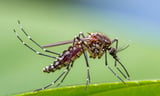
Nautilus • Feb 26, 2026
Mosquitoes Developed a Taste for Human Blood Before We Existed