New SCAN Discovery Could Revolutionize Parkinson’s Treatment with Non-Invasive Precision Therapies
February 4, 2026

A newly identified brain network, the somato-cognitive action network (SCAN), appears to be a central driver of Parkinson's disease, linking motor, cognitive, and bodily symptoms.
Imaging data from over 800 participants across the U.S. and China, including Parkinson's patients (with DBS or non-invasive therapies), healthy controls, and other movement disorders, underpins the SCAN findings.
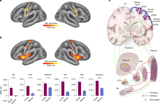
In a study of 863 individuals, SCAN showed excessive connectivity with deep-brain regions in Parkinson's patients, and stronger SCAN connectivity correlated with more severe motor symptoms.
Experts say SCAN-based neuromodulation could be a promising path for future treatments and advocate for larger multicenter trials to validate SCAN-targeted approaches.
Targeting SCAN with non-invasive transcranial magnetic stimulation (TMS) yielded greater symptom relief than stimulation of nearby regions in a clinical trial.
SCAN-targeted TMS produced faster and greater motor improvements than stimulating traditional motor areas (M1), and it reduced SCAN hyperconnectivity similarly to DBS, signaling a circuit-based therapy potential.
The report presents SCAN-targeted TMS as a precision treatment that could enable earlier, non-invasive intervention compared with deep brain stimulation.
(No additional unique point provided in source data for this id.)
The study discloses funding and potential conflicts of interest, including support from NIH, national science foundations, and industry ties with Neural Galaxy Inc. and Turing Medical Inc., among others.
Key researchers include Nico U. Dosenbach and Hesheng Liu of WashU, with collaboration involving Changping Laboratory and others; the findings were published in Nature on February 4, 2026.
Researchers call for continued work to clarify how different SCAN components map to specific symptoms and outline future trials via Turing Medical to test non-invasive SCAN-targeted therapies.
Dopaminergic medication (levodopa) also reduces SCAN hyperconnectivity, indicating pharmacologic and neuromodulatory therapies may act on the same SCAN pathway to ease symptoms.
Summary based on 5 sources
Get a daily email with more Science stories
Sources
Nature • Feb 4, 2026
Parkinson’s disease as a somato-cognitive action network disorder
Scientific American • Feb 4, 2026
‘Extraordinary’ brain network discovery changes our understanding of Parkinson’s disease
News-Medical • Feb 4, 2026
Brain network discovery opens new path for Parkinson’s treatment
SciTechDaily • Feb 4, 2026
Scientists May Have Found the True Source of Parkinson’s Disease