UCLA Study Finds 4-1BB CAR-NKT Cells Most Effective for Solid Tumor Treatment, Offers Off-the-Shelf Solution
February 4, 2026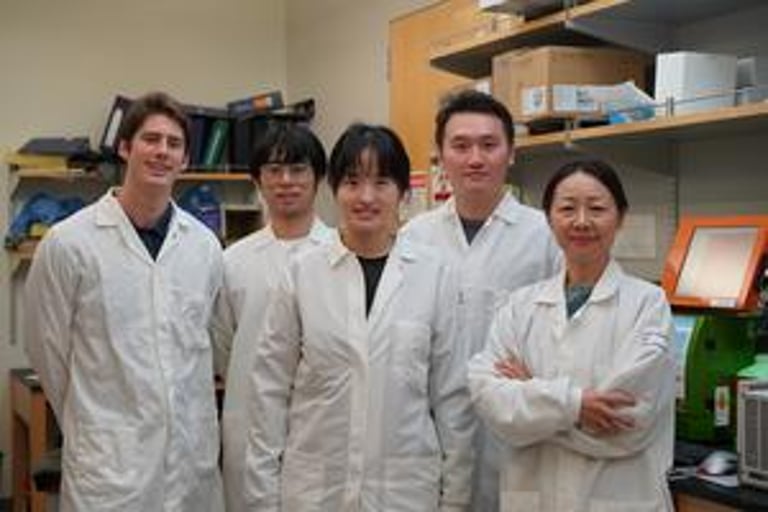

A UCLA-led study directly compared four CAR designs for engineered invariant natural killer T (NKT) cells targeting mesothelin in solid tumors, identifying the 4-1BB-containing CAR as the most effective for sustained antitumor activity and persistence.
In mouse models of ovarian cancer, 4-1BB CAR-NKT cells achieved superior tumor control, improved survival, and more favorable biodistribution than other designs.
Researchers engineered NKT cells from human blood stem cells, tested four CAR designs across ovarian, pancreatic, lung, and breast cancer models, then evaluated efficacy in mouse ovarian cancer experiments.
A major translational implication is the off-the-shelf potential: CAR-NKT cells can be mass-produced from donated blood stem cells, frozen, and stored for immediate use, unlike patient-specific CAR-T therapies.
CAR-NKT cells offer an off-the-shelf, allogeneic approach, with mass production, cryopreservation, and rapid distribution reducing treatment delays compared with autologous CAR-T therapies.
A notable advantage is the ability to mass-produce CAR-NKT cells from donated blood stem cells, freeze them, and have them ready for hospital use, addressing delays seen with patient-specific therapies.
Funding for the research came from the California Institute for Regenerative Medicine, the Department of Defense, UCLA Broad Stem Cell Research Center, and several UCLA-affiliated foundations and centers.
Safety signals included no attacks on healthy tissues, no graft-versus-host disease, and no uncontrolled cell growth in the preclinical assessments.
Safety assessments found no off-target toxicity, no graft-versus-host disease, and no aberrant clonal expansion, supporting clinical feasibility of CAR-NKT cells as an off-the-shelf therapy.
The study reported rapid, potent anti-tumor responses without safety concerns such as attacking healthy tissues, graft-versus-host disease, or uncontrolled growth, indicating a favorable preclinical safety profile.
The research was published in Blood Immunology & Cellular Therapy, led by senior author Lili Yang, with contributions from multiple researchers and support from UCLA entities and foundations.
The work involved investigators including Yanruide Li, Yichen Zhu, Tyler Halladay, Xinyuan Shen, Youcheng Yang, Zhe Li, Enbo Zhu, Yuning Chen, and Jie Huang, under Lili Yang’s supervision.
Summary based on 5 sources
Get a daily email with more Science stories
Sources
UCLA Health • Feb 4, 2026
UCLA scientists identify optimal design for off-the-shelf immunotherapy targeting solid tumors
EurekAlert! • Feb 4, 2026
UCLA scientists identify optimal design for off-the-shelf immunotherapy targeting solid tumors
Medical Xpress • Feb 4, 2026
An off-the-shelf immunotherapy for targeting solid tumors: Ready-to-use CAR-NKT cells show promise
Mirage News • Feb 4, 2026
Scientists Unveil Ideal Design for Solid Tumor Therapy