Meha Jain Wins Inaugural ASU-Science Prize for Pioneering Satellite Research in Climate-Resilient Farming
February 5, 2026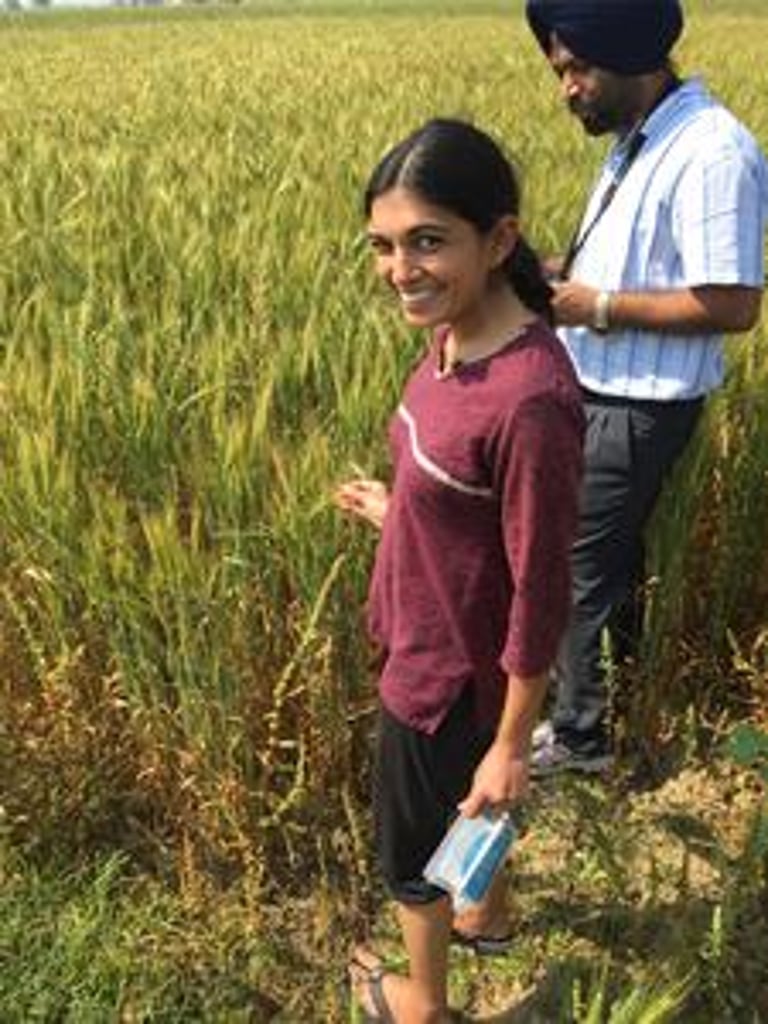

Her work uses satellite data and AI to study how smallholder farmers adapt to climate stress, emphasizing real-world social impact and scalable, data-driven decision-making to guide sustainable practices.
Meha Jain, an associate professor at the University of Michigan, won the inaugural ASU–Science Prize for Transformational Impact for research that combines high-resolution satellite imagery, machine learning, and ground-level farmer insights to address climate stress in smallholder farming communities.
The project measures impact beyond individual project sites by overlaying intervention data with landscape-scale environmental and yield outcomes, enabling accountability and understanding what works where.
Jain envisions scaling sustainable production while reducing water use, through tools and maps that help policymakers and practitioners target interventions with the highest likelihood of success.
Central to her approach is collaboration with local stakeholders—farmers, international organizations, and government agencies—to ensure data products support informed decision-making and farming resilience.
The prize seeks to broaden science’s role in society by translating research into policy and practical solutions, inviting broader participation from ASU faculty, students, and staff.
Fieldwork in India highlighted farmers’ growing reliance on groundwater to cope with climate change, prompting Jain to shift to measuring groundwater use at landscape scales using satellite data.
Her findings show groundwater dependence is rising despite long-term unsustainability, guiding a regional mapping of irrigation practices to assess real-world production and environmental impacts.
Agriculture is heterogeneous even within a single village, necessitating precision insights at the farm level and a smartphone app to deliver satellite-derived recommendations to farmers and NGOs.
The research aims to translate findings into practical tools for farming communities, with satellite-derived insights delivered via a smartphone app aimed at farmers and NGOs.
Her Science essay on Satellite data transforming food systems argues that satellite-derived insights can guide sustainable practices and improve yields under climate stress.
The work includes accountability and impact mapping to show where sustainable practices are adopted and how yields and environmental outcomes evolve over time.
Summary based on 3 sources
Get a daily email with more Science stories
Sources
EurekAlert! • Feb 5, 2026
Inaugural ASU–Science Prize Recognizes Research that Serves Farmers from the Ground Up
American Association for the Advancement of Science (AAAS) • Feb 5, 2026
Inaugural ASU–Science prize recognizes research that serves farmers from the ground up | American Association for the Advancement of Science (AAAS)
ASU News • Feb 5, 2026
Inaugural ASU–Science Prize winners use AI to help farmers, trafficking victims