New Dragonfly Species Discovery Highlights Need for Conservation in Human-Altered Habitats
February 8, 2026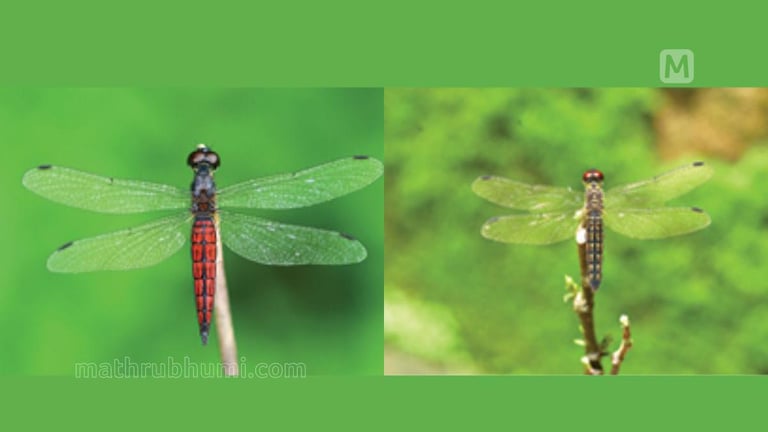

Researchers argue that conservation must go beyond forests to protect biodiversity in human-dominated habitats, private farmlands, and irrigation landscapes, as this odonate relies on such microhabitats.
The discovery prompts a broadened conservation focus to include odonates across a wide range of habitats shaped by human activity.
Dr. Vivek Chandran stressed shifting conservation emphasis to biodiversity in human-dominated habitats, noting that odonates occupy diverse habitats beyond forests and highlighting private farmlands and irrigation landscapes as crucial.
The new species was distinguished from its close relative Lyriothemis acigastra, which is found in Northeast India, and was formally described in the International Journal of Odonatology.
Identification drew on century-old museum specimens alongside contemporary observations.
Key distinguishing features include a slim abdomen, a distinctive tail and genital structure; males have a deep blood-red abdomen with black markings, while females are yellow and black and about three centimeters long.
Lyriothemis keralensis is defined by a slim abdomen, distinctive tail and genital structures, with males in deep blood-red and black markings and females in yellow and black patterns, measuring roughly three centimeters.
Distinctive traits center on a slimmer abdomen and unique tail/genital structures, with sexual dimorphism in coloration and a body length around three centimeters.
The species is notable for thriving in irrigation landscapes—pineapple and rubber plantations—rather than protected forest sanctuaries, as confirmed by century-old museum studies.
Lyriothemis keralensis, known as the Slender Bombardier, was identified in Kerala’s low-lying coastal plains after more than a decade of research.
The discovery distinguishes Lyriothemis keralensis from Lyriothemis acigastra of Northeast India, with findings published in the International Journal of Odonatology.
The formal description and findings were published in the International Journal of Odonatology after extensive investigation.
Summary based on 3 sources
Get a daily email with more Science stories
Sources
The Times Of India • Feb 8, 2026
‘Slender Bombardier’: Researchers identify new dragonfly species in Kerala’s farmlands
The Tribune • Feb 8, 2026
New dragonfly species found thriving in Kerala farmlands
NewsDrum • Feb 8, 2026
New dragonfly species found thriving in Kerala farmlands