Thailand Election: Reform-Minded Coalition Faces Economic and Political Challenges Amid Calls for Change
February 8, 2026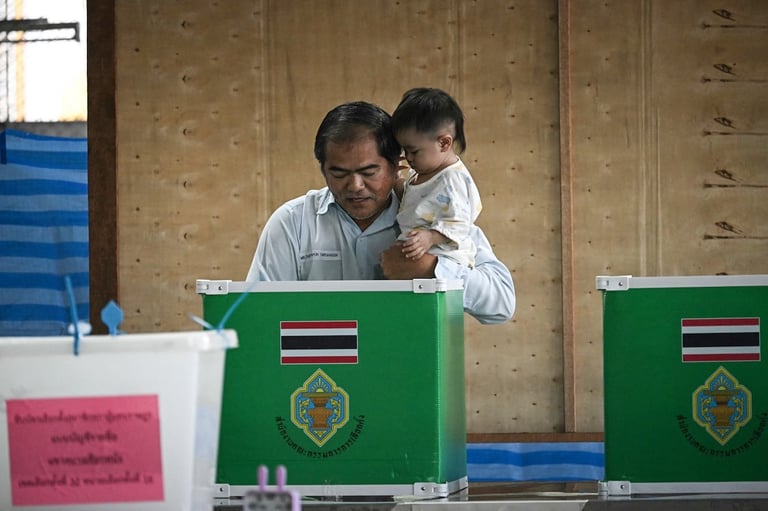

Thailand’s election ushers in a possible shift toward a reform-minded coalition, with the progressive People’s Party leading pre-election surveys while conservative incumbent Anutin Charnvirakul’s Bhumjaithai party sits second and could form a government through coalition with third-placed Pheu Thai.
Voters will also decide in a nationwide referendum on whether to start drafting a new constitution to replace the 2017 charter, a move supporters say would curb unelected influence and opponents fear could destabilize the system.
Analysts warn the new government would face structural challenges, including slow growth, a sluggish tourism rebound post-pandemic, cybercrime threats, and a volatile border with Cambodia marked by deadly clashes last year.
Beyond politics, the economy faces long-term headwinds: slower growth, high household debt, an aging population, and external pressure, with experts saying reforms are needed to push growth beyond short-term populism.
Industry leaders call for a dual track: boost livelihoods and the short-term economy while aggressively tackling corruption to sustain confidence and growth.
Debate over barter trade intensifies: critics warn it could distort prices and policy signals, while supporters say it could strengthen bargaining power and rural stability.
Analysts describe the election outcome as potentially reshaping governance, with a coalition leaning toward technocrats and conservative elites to enable policymaking.
Local policy proposals emphasize training programs, better caregiver systems, and social security measures to support workers facing factory closures.
Scholars warn of a market dominated by a few monopolies tied to influential families, urging reforms to create a level playing field and dismantle entrenched power.
Public sentiment appears to prioritize stability over rapid reform, a shift noted by regional analysts and reflected in coverage by major outlets.
Voters view the leader through a prism: some praise technocratic pragmatism, while others accuse him of old-guard corruption and opportunism.
Short-term outlook suggests continuity and a relatively smooth transition, though reformist and progressive voices may feel sidelined as nationalist themes dominate.
Summary based on 101 sources
Get a daily email with more World News stories
Sources

BBC News • Feb 10, 2026
Thailand national election 2026: Voters head to the polls in high-stakes election

The Guardian • Feb 7, 2026
The pro-democracy People’s party is leading the polls, but Thailand has been here before
The Guardian • Feb 8, 2026
Thai voters head to the polls with three main parties vying to form government