Notre Dame Study Unveils New Insights into Brain Compression and Neuron Death
February 9, 2026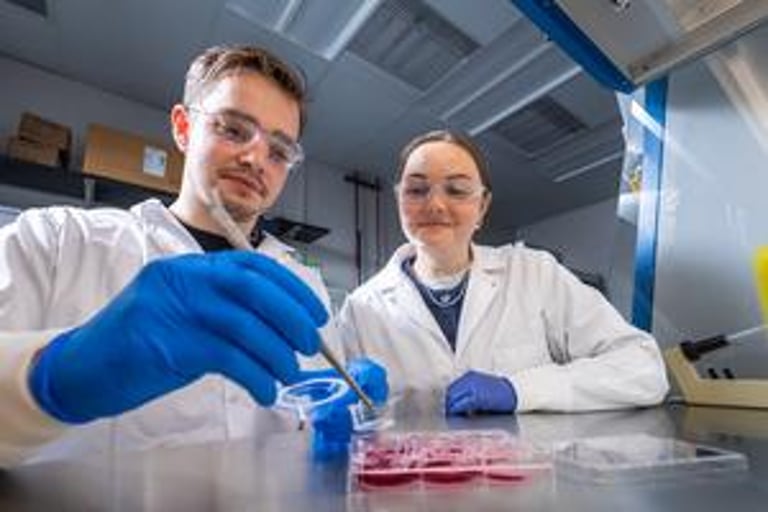

Led by Meenal Datta and Christopher Patzke, the team combined engineering and neuroscience to model mechanical stress on human neural networks derived from iPSCs.
The iPSC-derived neural cells were subjected to artificial pressure to create a human-relevant in vitro system for studying mechanical stress on neurons.
Researchers from Notre Dame are exploring how chronic brain compression, such as from glioblastoma, drives neuron death and contributes to cognitive and motor impairments.
The findings are published as Maksym Zarodniuk et al., Mechanical compression induces neuronal apoptosis, reduces synaptic activity, and promotes glial neuroinflammation in mice and humans, in Proceedings of the National Academy of Sciences, 2026.
The study suggests that targeting identified mechanobiology signaling pathways could offer therapeutic strategies to prevent indirect neuron death caused by mechanical compression, with potential applicability to other brain injuries involving mechanical forces.
A live compression system on preclinical brain models validated the link between mechanobiology, neuronal loss, and inflammation.
Clinical data from the Ivy Glioblastoma Atlas Project corroborate laboratory results, showing glioblastoma patients exhibit similar gene expression changes and cognitive and motor impairments.
The glioblastoma patient data align with the experimental model, suggesting the compression mechanism reflects real-world patterns of synaptic dysfunction.
Observed gene expression patterns in the model parallel those in patient data, supporting the relevance of tumor-induced compression to human disease and its links to cognitive deficits, motor issues, and seizure risk.
Funding came from the National Institutes of Health and Harper Cancer Research Institute, with additional support from Notre Dame centers and facilities.
The study appeared in the Proceedings of the National Academy of Sciences on January 2, 2026, with NIH and Harper Cancer Research Institute support and contributions from Notre Dame’s Berthiaume Institute for Precision Health.
Researchers used induced pluripotent stem cells to generate neural networks and applied mechanical pressure to model tumor-induced compression, enabling observation of neuron and glial cell death.
Summary based on 4 sources
Get a daily email with more Science stories
Sources
EurekAlert! • Feb 9, 2026
Physical pressure on the brain triggers neurons’ self-destruction programming
Medical Xpress • Feb 9, 2026
Physical pressure on the brain can trigger neurons' self-destruction programming
News-Medical • Feb 10, 2026
Chronic brain compression triggers neuron death through multiple pathways
BIOENGINEER.ORG • Feb 9, 2026
Neural Self-Destruction: How Physical Pressure on the Brain Activates Cell