Massive Lava Tube Found on Venus Sparks New Exploration Efforts
February 9, 2026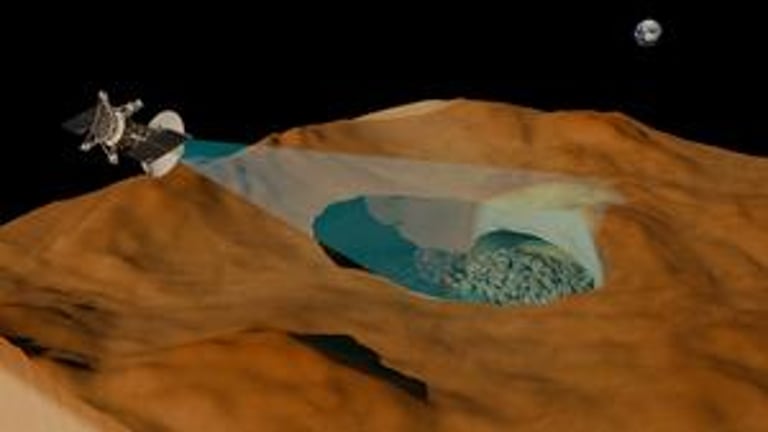

Current data validate the cavity portion near the skylight, but researchers call for higher-resolution radar to map the tube comprehensively and to identify additional conduits.
Only the skylight-adjacent section is confirmed with present data; further imaging is required to confirm extensions and detect more tubes.
The study was published on February 9, led by Lorenzo Bruzzone of the University of Trento, and appears in Nature Communications.
Future missions like ESA’s EnVision and NASA’s Veritas, equipped with advanced subsurface radar, could test the tube hypothesis and map conduits more thoroughly, including detections without surface openings.
EnVision’s Subsurface Radar Sounder and similar instruments on forthcoming missions are designed to detect subsurface conduits beneath Venus’ surface, potentially without skylight openings.
The candidate tube is identified by radar signatures and surface-collapse features, including skylight-like openings, suggesting a volcanic cavity that could extend for several dozen kilometers underground.
A study using Magellan radar data confirms a large subsurface lava tube near Nyx Mons on Venus, with a diameter of about one kilometer, a roof at least 150 meters thick, and a void depth of at least 375 meters.
The findings are published in Nature Communications (2026) under the title Radar-Based Observation of a Lava Tube on Venus, with DOI 10.1038/s41467-026-68643-6.
This discovery kicks off a broader research effort into Venusian subsurface structures and could influence future mission design and objectives.
The work provides a basis for revising our understanding of Venus’s volcanic evolution and motivates more exploration of subsurface features.
Morphology analyses indicate the conduit may extend at least 45 kilometers beyond the skylight area, with the cavity located at a depth of about 375 meters.
Confirming the tube’s full size, shape, and stability will require new observations and higher-resolution radar data from upcoming Venus missions.
Summary based on 3 sources
Get a daily email with more Science stories
Sources
Phys.org • Feb 9, 2026
First evidence of a subsurface lava tube on Venus
EurekAlert! • Feb 9, 2026
Evidence of a subsurface lava tube on Venus
Space • Feb 9, 2026
Venus may have an underground tunnel carved by volcano eruptions