NASA's Van Allen Probe A Set for Early Re-entry Amid Increased Solar Activity
March 10, 2026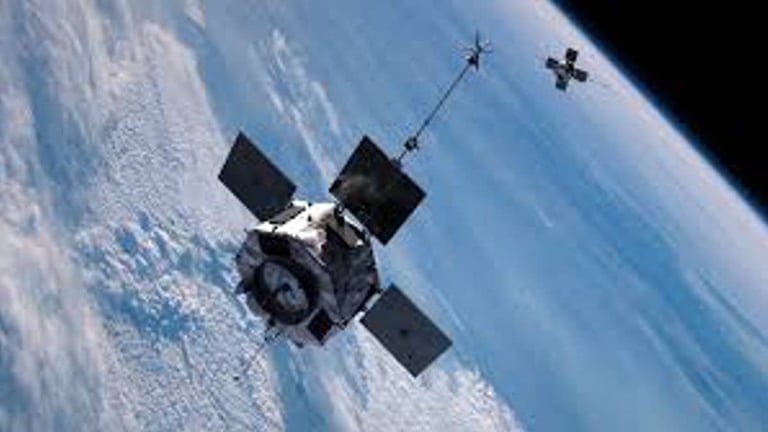


NASA remains the U.S. federal agency leading space exploration and research, based in Washington, D.C.
Re-entries of aging satellites contribute to space-debris concerns, with tens of thousands of larger pieces and millions of small fragments in low Earth orbit posing collision and safety risks.
The re-entry is coming sooner than anticipated because a more active solar cycle increased drag, accelerating the mission’s timeline from a planned 2034 end.
NASA’s Van Allen Probe A, a compact satellite launched in 2012 to study Earth's radiation belts, is re-entering the atmosphere and is expected to crash to Earth around 7:45 p.m. EDT on March 10, 2026, with a ±24-hour uncertainty.
The Space Force estimates the chance of any harm to people on Earth at about 1 in 4,200, with overall individual risk considered extremely low.
Context notes mention Talker News and Talker Research as affiliations, with references to related satellites and prior coverage to frame the story.
Despite ending, the mission’s data remain valuable for understanding solar winds, radiation’s impact on communications, navigation, power grids, and astronauts, and the same radiation helps drive auroras on Earth.
Key scientific takeaways include revealing conditions under intense solar activity where a third belt can form and identifying a low-frequency radio barrier that shields against space radiation.
The end of the mission spotlights ongoing space-debris concerns, highlighting survivability and ground-impact risks as an area of growing awareness.
Background notes explain how radiation belts function as natural shields and underscore the ongoing scientific value of the Van Allen Probes despite the mission’s conclusion.
The probes produced significant findings, spurred hundreds of publications, and were the first to spend extended time inside the belts, reshaping our understanding of Earth’s space environment.
Named after James Van Allen, the radiation belts are crucial for predicting how solar activity affects satellites, astronauts, and Earth-based systems like communications, navigation, and power grids.
Summary based on 13 sources
Get a daily email with more World News stories
Sources

The Guardian • Mar 10, 2026
Parts of giant Nasa satellite to crash to Earth, posing low risk
CBS News • Mar 10, 2026
1,300-pound NASA satellite set to crash down to Earth today after 14 years in space
CNET • Mar 10, 2026
Look Out Below! A 1,300-Pound NASA Satellite Is on Its Way Back to Earth