NASA's Perseverance Uncovers Ancient Subsurface River Delta on Mars, Extending Habitable History
March 18, 2026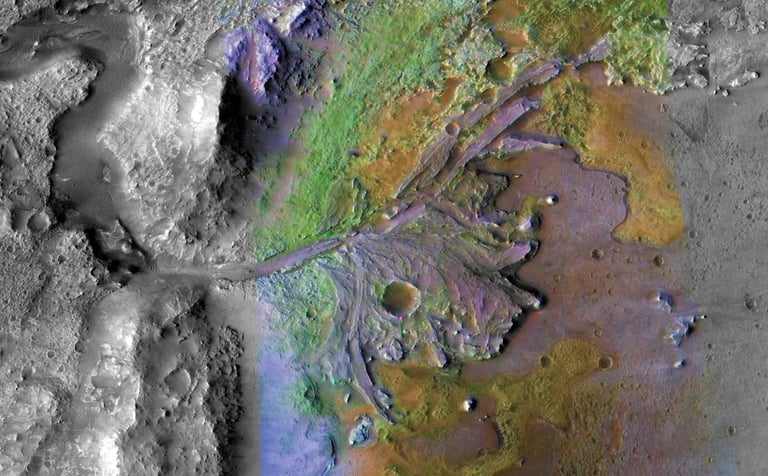

NASA's Perseverance rover, using ground-penetrating radar (RIMFAX), has detected an ancient river delta buried beneath the surface of Jezero Crater on Mars, revealing a subsurface delta system that extends deeper than previously explored.
A Science Advances study incorporating data from 78 rover traverses shows a vast, previously hidden delta beneath Jezero, suggesting water activity persisted longer than surface evidence alone indicated.
The buried delta, potentially as thick as 90 meters, points to multiple episodes of deposition and erosion and pushes Martian hydrologic activity back to the Noachian era, around 4.2 to 3.7 billion years ago.
The study, published after analyzing traverses from late 2023 to early 2024, highlights the depth and structure of the subsurface features and their sedimentary context.
Estimated to date to roughly 3.7 to 4.2 billion years ago, the buried delta predates the nearby Western Delta and represents some of the oldest evidence of Martian water flow yet found.
Radar and sedimentary data indicate that Mars hosted multiple early periods of water flow in Jezero, expanding the timeline of habitable conditions.
RIMFAX provided the deepest subsurface data to date from the mission, enabling three-dimensional mapping of buried sediments and eroded surfaces consistent with deltaic environments.
The 6.1-kilometer traverse and measurements reaching depths beyond 35 meters reveal layered rock structures signaling ancient delta formation and water-transport processes.
These findings reinforce that Mars had a more complex and prolonged water history, increasing the planet’s past habitability potential and the chance of preserving biosignatures below the surface.
By extending habitable conditions back in time, the results broaden opportunities to find preserved traces of life in the subsurface.
Earlier Perseverance findings include a rock sample with potential biosignatures dating to roughly 3.2 to 3.8 billion years ago, though alternative nonbiological explanations remain possible.
Researchers such as Emily Cardarelli (UCLA) and colleagues emphasize the importance of long-duration fluvial records and the role of radar in advancing our understanding of Mars’ ancient liquid water.
Summary based on 3 sources
Get a daily email with more Science stories
Sources
Yahoo News • Mar 18, 2026
NASA rover detects some of the oldest evidence of water flowing on Mars
Scientific American • Mar 18, 2026
NASA's Perseverance Mars rover discovers even older lost rivers at Jezero Crater
ScienceAlert • Mar 18, 2026
Hidden Ancient River System Found Deep Under The Surface of Mars