Deadly Fungus Threatens to Decimate Australia's Reptile Population, Experts Warn
March 2, 2026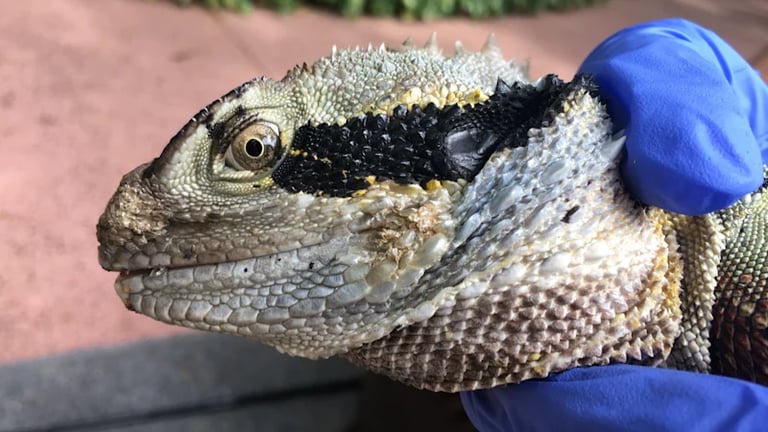


A study from the University of Queensland warns that the fungus Nannizziopsis barbatae threatens Australia’s reptiles by causing skin lesions, lethargy, starvation, and death, with potential impacts comparable to other wildlife fungal diseases.
NB is posing an alarming risk to Brisbane lizards and possibly the broader Australian reptile population, with researchers calling the situation existential for native species.
The study stresses environmental transmission and urges proactive management, nationwide monitoring, and the development of control and prevention strategies to curb outbreaks.
Since its first detection in 2013, the infection rate in the studied population has risen by about 35 percent over ten years, underscoring a growing threat.
Public involvement is encouraged, with residents urged to report sick water dragons and researchers welcome photos or videos, while authorities are asked to provide support to protect reptile populations.
NB was first found in wild water dragons in Roma Street Parklands in 2013, four years after its initial discovery on a pet lizard, and has since affected about half of the park’s roughly 400 dragons.
There is no current cure, and climate change and habitat loss may worsen the disease’s impact, prompting calls for cross-government collaboration to understand and mitigate the threat.
Researchers remain uncertain whether NB is natural to Australia or introduced, with uncertain national distribution; soil samples in Brisbane have tested positive, and cases have appeared in Perth and Dubbo, NSW.
The fungus spreads in the environment, surviving in soil and transmitting through contaminated soil rather than primarily through infected animals.
Infected lizards have been reported in Brisbane, Perth, and Dubbo, with Brisbane soil samples showing the fungus persists environmentally, though overall reptile infection rates are not yet known.
The infection begins on the skin and progresses slowly, with environmental exposure and habitat factors playing a major role in transmission over direct contact.
NB may exist in the environment without a host and could drive population-wide declines, potentially threatening up to about 500 of Australia’s roughly 1,000 reptile species.
Summary based on 2 sources
Get a daily email with more Science stories
Sources
Brisbane Times • Mar 2, 2026
‘Alarming’ mystery fungus putting Australian reptiles at risk
The University of Queensland • Mar 2, 2026
Deadly soil fungal pathogen threatening Australia’s reptiles