New Study Unveils Unified Mechanism Linking Amyloid Beta and Tau in Alzheimer's Disease
March 22, 2026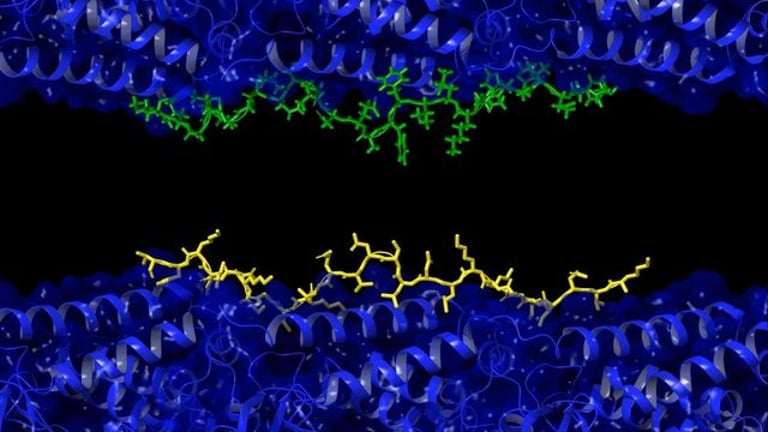

The microtubule nexus hypothesis posits that amyloid beta’s toxic effect may begin by displacing tau from microtubules, leading to tau destabilization, increased tau phosphorylation and aggregation, and impaired microtubule stability.
A new study proposes a unifying mechanism for Alzheimer’s disease by showing that amyloid beta and tau may disrupt microtubule function through competitive binding to microtubules, linking two long-debated players in the disease.
Amyloid beta binds to microtubules with affinities similar to tau, and structural similarities between amyloid beta and tau’s microtubule-binding regions suggest overlapping binding sites on microtubules.
The framework, detailed in Shoff, Derbez-Morin, Cai, and Julian’s 2026 paper in PNAS Nexus, offers a simple and unifying theory for the underlying cause of Alzheimer’s disease.
This framework could explain why amyloid plaques don’t always correlate with cognitive decline and why many amyloid-focused therapies have had limited long-term success, by highlighting early microtubule disruption as a critical event.
If confirmed, the theory could shift therapeutic focus from merely clearing plaques to preventing amyloid beta from interfering with microtubules or enhancing neuronal clearance of amyloid beta.
The study’s authors emphasize that this integrated explanation connects decades of disparate findings and points to new avenues for treatment development.
The proposed competition could cause the neuronal transport system to break down, with tau misbehaving and aggregating in areas outside its normal location when not bound to microtubules.
Observations that lithium stabilizes microtubules and is associated with reduced Alzheimer’s risk support the idea that preserving microtubule integrity could counteract amyloid beta’s disruptive effects.
Summary based on 2 sources
Get a daily email with more Science stories
Sources

SciTechDaily • Mar 22, 2026
New Study Challenges Decades of Alzheimer’s Understanding With Microtubule Discovery
Technology Networks • Mar 19, 2026
Amyloid Beta May Disrupt Tau Function in Alzheimer’s