Study Warns Extreme Climate Risks at 2°C Warming, Urges Urgent Policy Action
March 25, 2026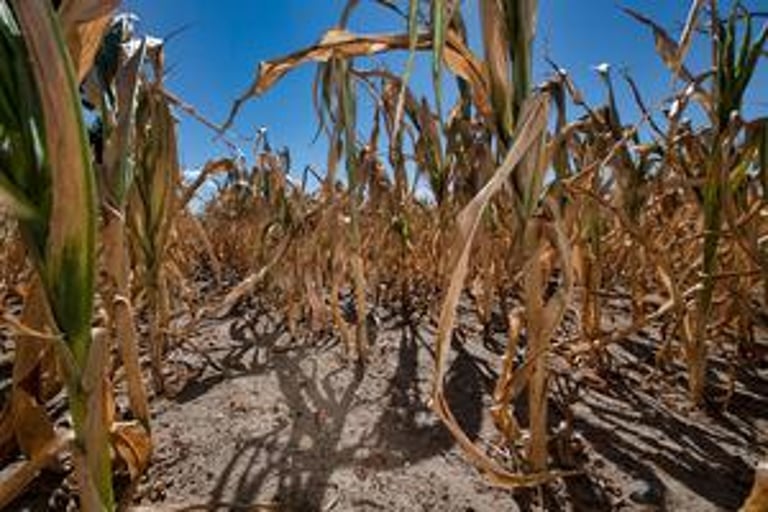


A new Nature study argues that extreme global climate outcomes can occur at moderate warming of 2°C, challenging reliance on model averages at higher warming levels to assess risk.
The research shows that with 2°C of warming, some extreme weather events could occur that previously were projected only for higher warming, signaling significant risk even if Paris targets are met.
These worst‑case outcomes at 2°C are driven by differences between models rather than natural variability, meaning extreme results are plausible even at moderate warming.
Researchers use a sector-focused approach, identifying where severe impacts are most likely by examining regional drivers like heavy rainfall, agricultural droughts, and wildfire‑conducive weather.
They construct spatially coherent results from single‑model simulations to avoid overstating extremes by combining incompatible scenarios, aiming for realism in projections.
The study emphasizes communicating risk beyond averages and considering low‑probability but high‑impact outcomes in policy and adaptation planning.
Relying solely on model averages can give a false sense of security and underestimates extremes, particularly for staple crops and sectors vital to global food security.
The findings advocate integrating extreme‑outcome risk assessments into climate policy and adaptation, while underscoring the urgency to limit warming well below 2°C.
Experts urge urgent mitigation and stronger adaptation, noting that even at 2°C some regions and sectors may face threats comparable to higher warming levels.
The authors caution that 2°C does not equal the severity of higher warming, but extreme impacts can occur in vulnerable sectors, calling for risk‑informed adaptation and accelerated action.
Vulnerable areas such as agriculture, urban zones, and wildfire risk could face severe effects at 2°C, requiring proactive policy and adaptation measures.
In the Iberian Peninsula, densely populated areas may experience amplified extreme rainfall and drought under 2°C more than under higher warming, signaling elevated local risk.
Summary based on 3 sources
Get a daily email with more World News stories
Sources
EurekAlert! • Mar 25, 2026
Extreme global climate outcomes are possible even at 2°C of warming