UN Declares Slave Trade Worst Crime Against Humanity, Calls for Reparations Amid Global Debate
March 25, 2026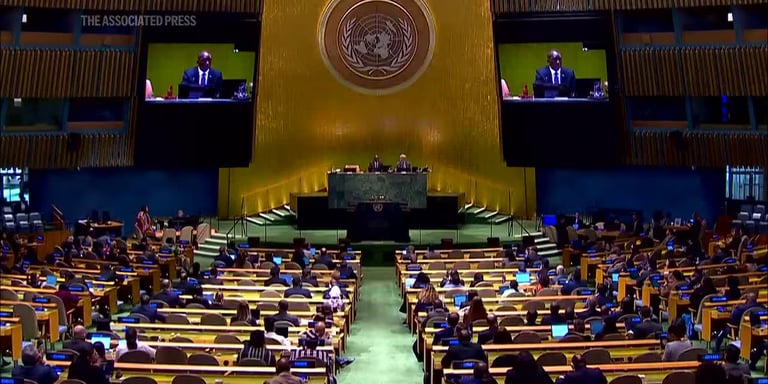

Foreign Minister Samuel Okudzeto Ablakwa says the initiative seeks acknowledgment and dignity, arguing that slavery’s effects persist in today’s injustices.
The United Nations General Assembly adopted a landmark non-binding resolution declaring the transatlantic chattel slave trade the gravest crime against humanity and urging reparations as a remedy, with backing from the African Union and Caricom.
Supporters, including Ghana’s President John Dramani Mahama, frame the measure as essential for memory, healing, justice, and preventing forgetting of victims.
Western powers push for accountability for ongoing discrimination and for addressing root causes like racism, xenophobia, and intolerance, while confronting modern slavery such as trafficking and forced labor.
Edmond Kombat, ESQ, a lawyer and thought leader, is identified as the writer and provides context on his role and affiliations.
European responses have been cautious, prioritizing cultural artifact repatriation over financial reparations, with France moving to simplify returns of colonial-era objects and others arguing cultural restitution cannot fully remedy colonial damages.
Anticipated pushback from Western countries is noted, outlining the political dynamics and the potential scope of reparations discussions.
Civil rights groups warn that reparations measures could complicate progress on addressing racism, slavery, and colonial history.
The proposal is framed as a legal claim rather than purely humanitarian, emphasizing a legal examination without selective amnesia.
Algeria has enacted a legal framework designating French colonial actions from 1830 to 1962 as state crimes and prohibiting public glorification.
Mahama frames the effort within a historical continuum of resistance and justice, linking independence struggles to broader changes in the international economic system.
The United Kingdom and some EU members abstained, with officials arguing against holding present-day institutions responsible for past actions.
Summary based on 45 sources
Get a daily email with more World News stories
Sources

The Guardian • Mar 25, 2026
UN votes to describe slave trade as ‘gravest crime against humanity’
BBC News • Mar 25, 2026
Ghana demands compensation for slavery in landmark UN General Assembly vote
The Independent • Mar 25, 2026
Britain abstains from key UN vote to recognise slavery as ‘gravest crime against humanity’