FSU Engineers Crack Supersonic Jet Noise Puzzle, Enhancing Vertical Landing Safety
March 26, 2026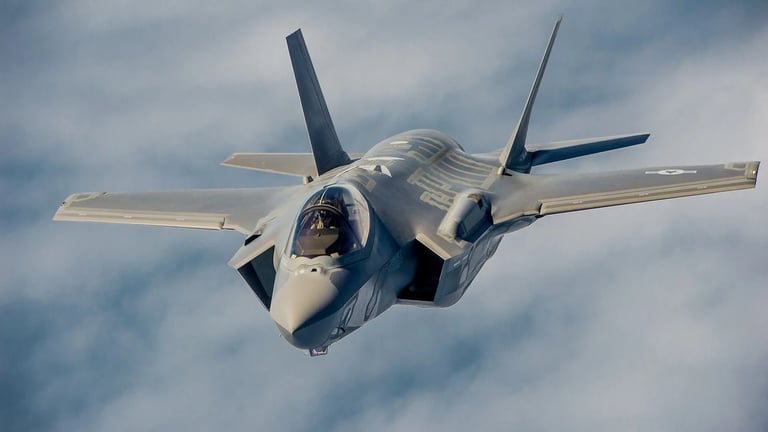

A team from Florida State University’s FAMU-FSU College of Engineering and the Florida Center for Advanced Aero-Propulsion studied noise feedback loops in supersonic jets to improve safety during vertical landings, developing a model to predict these loops with potential to reduce noise exposure for aircraft and ground crews.
Lead author Myungjun Song, professor Farrukh S. Alvi, and graduate student Serdar Seçkin led the work, with funding from multiple agencies and funds.
Published in the Journal of Fluid Mechanics, the study analyzes jet exhaust interaction with ground surfaces to produce resonant feedback that can exceed 140 decibels, posing risks to aircraft structure and hearing.
The research is part of broader efforts via InSPIRE and FCAAP, with support from the Office of Naval Research, NSF, AFOSR, FCAAP, and other partners.
Practical implications include redesigning STOVL nozzles, landing pads, and procedures to break or detune the feedback loop, reducing structural stress and safety risks for ground crews.
Experiments featured a Mach 1.5 jet, varying nozzle pressure and jet-ground distance, and employed schlieren imaging, high-speed videography, and precise microphones to quantify flow and acoustics in real time.
The work aims to enable safer operations as vertical-landing jets are deployed in confined environments where noise control is critical.
Experiments at FCAAP’s STOVL facility replicated conditions for aircraft like the F-35B to observe exhaust-ground interactions producing resonant noise above 140 decibels.
The study represents a step toward more accurate prediction and mitigation of noise in supersonic jet impingement scenarios.
They found that acoustic standing waves between the aircraft and ground set the noise pitch, while the size and speed of disturbances determine loudness, challenging the idea that disturbance velocity alone governs pitch.
Using schlieren imaging, high-speed cameras, and microphones, researchers observed that standing waves determine pitch and that slower, larger disturbances amplify loudness.
Experiments and analysis were conducted at FCAAP facilities, including the STOVL and hot jet facilities in an anechoic chamber, enabling realistic high-speed aerodynamic and acoustic measurements.
Summary based on 2 sources
Get a daily email with more Science stories
Sources
Interesting Engineering • Mar 26, 2026
Engineers crack Mach 1.5 noise issue in supersonic jets for safe landings
Florida State University News • Mar 25, 2026
FAMU-FSU College of Engineering researchers develop new model for predicting noise feedback loops from supersonic jets