Study Warns 100 Million Americans to Face Unhealthy Air by 2100 Due to Climate Change
March 31, 2026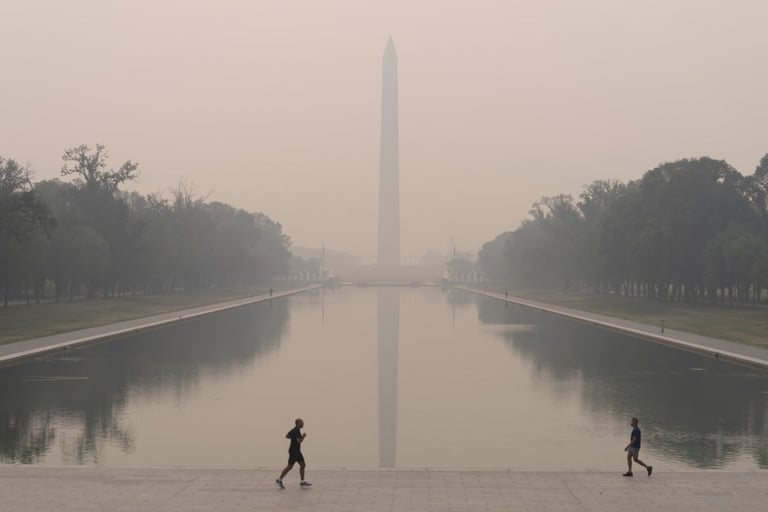

A University of Waterloo-led international study projects that by 2100 nearly one in three Americans will live in areas with unhealthy air for sensitive groups during the May–September smog season, up from about 14 million people in 2000.
The study predicts roughly 100 million Americans will experience daily air quality poor enough to trigger alerts, driven by climate change and rising ozone and particulate matter.
The researchers model the smog season from May through September, indicating about 100 million residents would live where smog-season air quality would require health advisories, up from around 14 million in 2000.
Seniors gain disproportionately from exposure-reduction measures such as staying indoors, wearing masks, and improved building filtration.
Policy and adaptation scenarios show emissions reductions and adaptive measures can substantially mitigate adverse outcomes, with seniors receiving especially strong benefit.
Seniors appear to benefit more from mitigation strategies than other vulnerable groups, a key finding of the study.
Health impacts include increased asthma exacerbations, COPD, cardiovascular stress, and potential long-term morbidity and mortality from chronic exposure.
The study expands on prior work by assessing both ozone and fine particulate matter as drivers of air quality alerts and related health risks.
By including ozone and PM together, the study shows they drive most smog-related health warnings and mortality risks.
The research, published in Environmental Science & Technology, is led by Rebecca Saari at the University of Waterloo with U.S. collaborators, underscoring the value of long-term protective adaptations beyond short-term stay-inside guidance.
The study emphasizes tailored public health guidance and infrastructure investments to protect vulnerable groups and prevent normalizing exposure to unhealthy air.
The research analyzes the economic costs of worsening air pollution and evaluates the potential impact of mitigation policies over the next 75 years.
Summary based on 5 sources
Get a daily email with more Science stories
Sources
Waterloo News • Mar 31, 2026
Climate change could make unhealthy air a routine reality by 2100 | Waterloo News
BIOENGINEER.ORG • Mar 31, 2026
By 2100, Climate Change May Turn Unhealthy Air Into a Daily Reality
The Lethbridge Herald - News and Sports from around Lethbridge • Mar 31, 2026
Summer air quality alerts will become routine in U.S. without action: UWaterloo study
BurlingtonToday.com • Mar 31, 2026
Summer air quality alerts will become routine in U.S. without action: UWaterloo study