Gut Microbiome Revolutionizes Cancer Immunotherapy, Enhancing Outcomes and Reducing Toxicity
March 9, 2026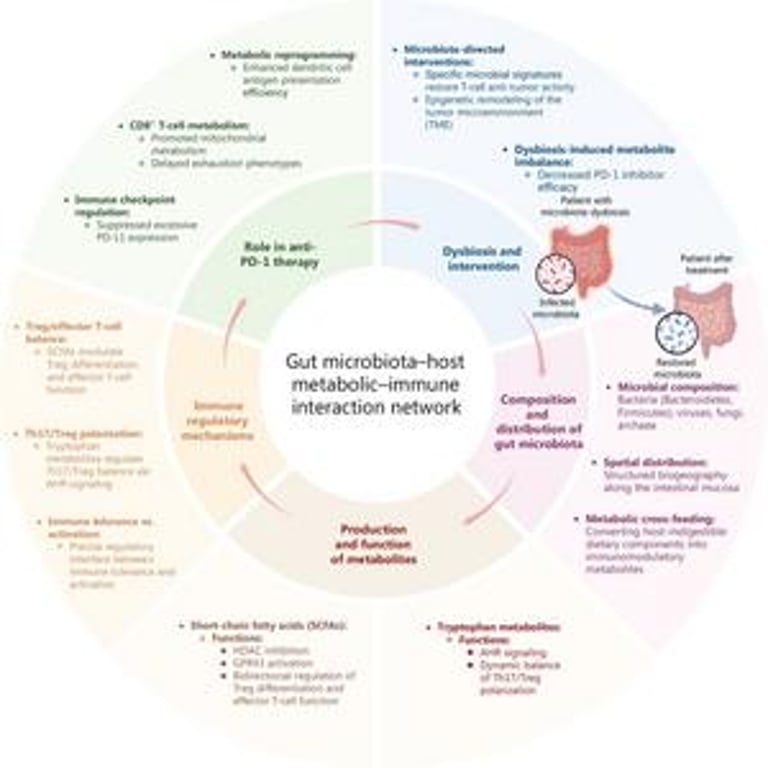

Beneficial microbes such as Akkermansia muciniphila, Bifidobacterium, and Lactobacillus promote anti-tumor immunity by producing metabolites like short-chain fatty acids and tryptophan derivatives that modulate T-cell differentiation, antigen presentation, and T-cell exhaustion.
Emerging microbial biomarkers, combined with metabolomics and machine learning, show promise in predicting immunotherapy outcomes; synthetic biology approaches, including engineered bacteria with safety switches or patient-derived strains, are proposed to deliver targeted immune modulation within tumors.
Gut microbiota significantly influences cancer immunotherapy outcomes, especially responses to PD-1/PD-L1 inhibitors, by shaping anti-tumor immunity through microbial metabolites and interactions with immune cells.
Clinical data indicate fecal microbiota transplantation can re-establish treatment responses in some advanced cancer patients and may reduce immune-related adverse events.
Beyond cancer, microbiome-immune insights may influence therapies for autoimmune and inflammatory diseases, positioning the gut microbiome as a controllable therapeutic platform for precision medicine.
Microbiota-guided immunotherapy could reshape oncology by enabling dietary modulation, probiotics, microbiota transplantation, engineered live therapeutics, and AI-assisted microbiome modeling to tailor treatments and reduce toxicity.
The integrated evidence from preclinical experiments, clinical trials, and multi-omics analyses shows commensal bacteria enhance immune activation, treatment sensitivity, and can modulate toxicity.
A comprehensive review integrates diverse evidence demonstrating how commensal bacteria shape immune activation, treatment sensitivity, and adverse events.
Summary based on 3 sources
Get a daily email with more Science stories
Sources
EurekAlert! • Mar 9, 2026
Gut microbes rewrite the rules of cancer immunotherapy
Newswise • Mar 9, 2026
Gut Microbes Rewrite the Rules of Cancer Immunotherapy | Newswise
News-Medical • Mar 9, 2026
Microbial ecosystems influence success of cancer checkpoint immunotherapy