Europe's Tank Power Shifts to Advanced, Interoperable Forces by 2026: Türkiye and Poland Lead Modernization
April 13, 2026

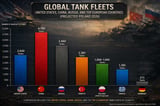
Poland’s mix includes modern tanks like the K2 Black Panther, M1A2/M1A1, and Leopard 2 variants, alongside legacy platforms, with a target of about 1,000 K2/K2PLs and total tanks reaching 1,800–1,900 to surpass regional rivals in capability.
Germany fields a relatively small but advanced fleet of 313 Leopard 2 tanks (102–104 2A7V and 209 2A5/A6), highlighting high capability but limited deployment size.
Türkiye combines a large numerical force with many M48/M60 variants and limited next-generation systems like Altay, signaling mass but constrained modern capability.
Global context shows China, Russia, and the United States still lead in numbers, but Europe strengthens through advanced platforms like Leopard 2, Abrams, and K2.
Three converging tank families—Leopard 2 (upgraded to 2A8), Abrams SEPv3, and K2—are driving Europe toward standardized, interoperable, high-end capabilities for eastern flank defense.
The broader takeaway is that Europe hasn’t outbuilt Russia in numbers, but is building an armored structure in the east that tightens alliance interoperability, logistics, and combat readiness, potentially shifting NATO’s eastern strategic balance.
Europe’s tank power in 2026 is shifting from sheer quantities to modern, combat-ready armored forces, with Türkiye holding the largest European fleet at 2,381 tanks and Poland rapidly modernizing toward 1,800–1,900 modern MBTs.
France operates about 200 Leclerc tanks, including 51 Leclerc XLR upgrades, emphasizing automation and digital battlefield integration, while the United Kingdom fields 213 Challenger 2 tanks moving toward Challenger 3.
The trend is toward smaller, more capable formations anchored by modern platforms (Leopard 2, Abrams, K2) with enhanced fire control, protection, digital networks, and interoperability within NATO rather than sheer inventories.
Greece maintains a mixed fleet of about 1,385 tanks, including 170 Leopard 2A6HEL, 183 Leopard 2A4, and around 500 Leopard 1s, offering regional mass with credible high-end capability but uneven modernization.
Analysts emphasize the strategic implications of modernization, interoperability, and industrial sustainment across European armored forces.
Leopard 2A8 is emerging as a unifying high-end standard, with Germany leading uptake and several partners upgrading or buying to ensure interoperability across Europe.
Summary based on 2 sources
Get a daily email with more EU News stories
Sources

UNITED24 Media • Apr 13, 2026
Europe’s Tank Race Is Back—And NATO’s Eastern Flank Is Getting Much Harder for Russia