NASA Study Reveals Young Sun-like Stars Dim X-rays Faster, Impacting Planetary Habitability
April 14, 2026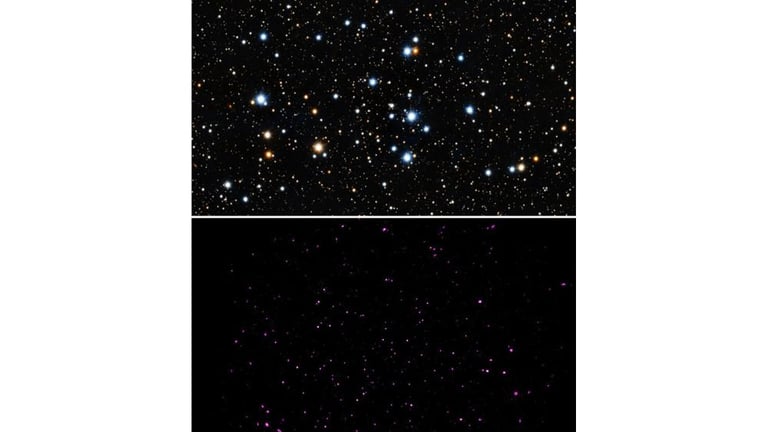

A new NASA Chandra study finds that young Sun-like stars dim in X-rays faster than previously thought, across clusters aged roughly 45 to 750 million years.
Lead author Konstantin Getman of Penn State and co-author Vladimir Airapetian of NASA Goddard discuss the findings and their implications for understanding the Sun’s past and planetary habitability.
Co-authors including Airapetian and Eric Feigelson of Penn State emphasize the broader significance for the Sun’s history and the development of life-bearing planets.
Compared with prior models, X-ray output declines about 15 times faster during this adolescent phase, with Sun-like stars emitting only a quarter to a third of the X-rays expected.
By studying similar stars at different ages, the work constrains the Sun’s past activity and its implications for planetary environments.
The research combines new Chandra observations of five young clusters (45–100 million years) with archival ROSAT data and Gaia-based cluster membership to assess intrinsic X-ray output.
Mass-related differences show solar-mass stars quiet down in X-rays within a few hundred million years, while lower-mass stars retain higher X-ray activity longer.
The rapid X-ray dimming could help planetary atmospheres form and endure, aligning with views of the early Sun’s history and potential for life-friendly conditions.
Lower X-ray flux and fewer energetic particles may make planets around these younger stars more likely to retain atmospheres and support habitability compared to earlier expectations.
NASA centers involved include the Marshall Space Flight Center and the Chandra X-ray Center, with data from Gaia and ROSAT contributing to the analysis.
The study brings together researchers from Penn State, NASA Goddard, and ESA’s Gaia mission, under the Chandra program management at Marshall Space Flight Center.
Scientists are exploring the mechanism behind the rapid dimming, with leading ideas pointing to less efficient magnetic field generation rather than external factors.
Summary based on 4 sources
Get a daily email with more Science stories
Sources
NASA Science • Apr 14, 2026
NASA Finds Young Stars Dim in X-rays Surprisingly Quickly - NASA Science
Newswise • Apr 14, 2026
NASA Finds Young Stars Dim in X-rays Surprisingly Quickly | Newswise
Penn State News • Apr 14, 2026
Dimming X-rays could be boon for life on planets around young sun-like stars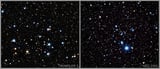
Mirage News • Apr 14, 2026
NASA: Young Stars Dim in X-rays Faster Than Expected