Fruit Flies Reveal Brain-Fat Axis Linking Pathogen Detection to Avoidance Behavior
April 16, 2026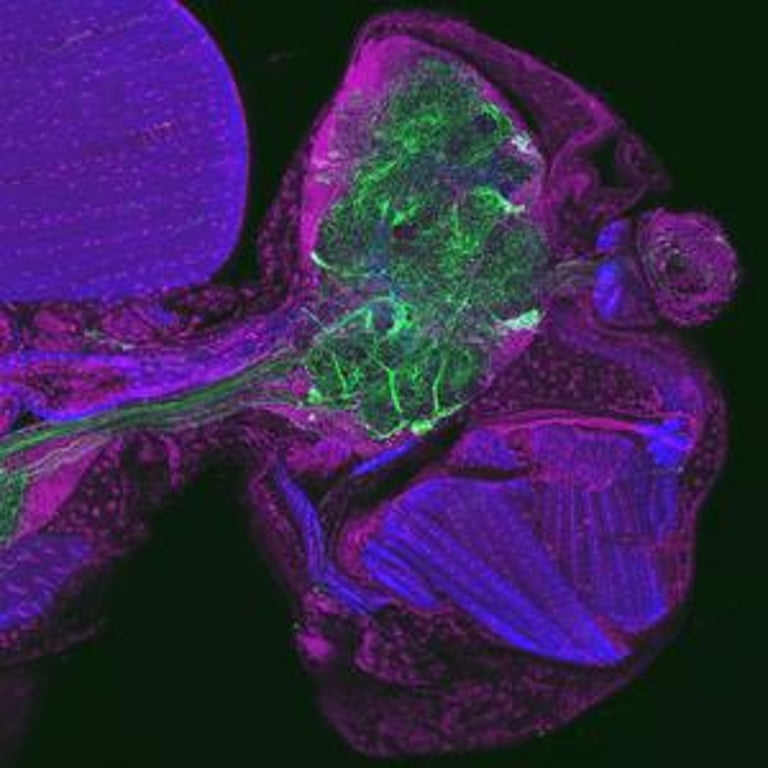

A bidirectional brain-fat body axis in fruit flies links pathogen detection to learned avoidance behavior through a neural–adipocyte signaling loop, connecting immune signals to behavior.
Activated receptors trigger octopamine release in neurons, which stimulates dopamine production in fat cells; dopamine is then transported to the brain to boost learning-related activity that leads to avoidance of the odor tied to pathogenic bacteria.
Initial attraction to the odor of harmful bacteria shifts to avoidance after infection, revealing conditioned taste aversion as a survival mechanism.
The study was a collaboration among the Universities of Bonn and Leipzig, Tohoku University, and University Hospital Bonn, with funding from the German Research Foundation and related networks, and was published in Neuron with open access.
Participating institutions include the University of Bonn, University Hospital Bonn, Leipzig, and Tohoku University (Japan); the research was funded by the German Research Foundation (DFG), iBehave, and the Human Frontier Science Program Organization.
Publication details: Yujie Wang et al., A Bidirectional Brain-Fat Body Axis for Pathogen Avoidance, Neuron, published on April 16, 2026, DOI: 10.1016/j.neuron.2026.03.026.
The research integrates brain, immune system, and adipose tissue interactions, and suggests similar mechanisms could occur in humans given adipose tissue’s ability to produce neurotransmitters that influence brain function and appetite.
There is translational potential for humans: mammalian adipose tissue also secretes neuroactive compounds, suggesting conserved brain–fat communication mechanisms that could affect pathogen avoidance, sickness behavior, and possibly eating disorders.
The authors propose that this mechanism may exist in mammals and humans, with implications for understanding the metabolism–immune–brain axis.
Future work aims to dissect how adipocyte dopamine synthesis and transport to the brain are regulated, identify receptors and downstream pathways, and understand how nutritional status modulates the brain–fat axis in pathogen defense.
The research used a model organism to clarify brain–body interactions that promote survival by avoiding contaminated food after an immune challenge, with findings published in Neuron.
The study reframes fat tissue as an active neuroendocrine organ capable of influencing cognitive processes and behavior through immune–metabolic signaling.
Summary based on 4 sources
Get a daily email with more Science stories
Sources

Neuroscience News • Apr 16, 2026
Fat Cells Teach the Brain to Avoid Bad Food
EurekAlert! • Apr 16, 2026
Fat cells play key role in avoidance learning
BIOENGINEER.ORG • Apr 16, 2026
Fat Cells Crucial in Learning to Avoid Danger, Study Finds
News-Medical • Apr 16, 2026
Scientists discover how the immune system signals the brain to avoid germs