Landmark Study Maps Mouse Olfactory Receptors, Paving Way for Smell Restoration Therapies
April 28, 2026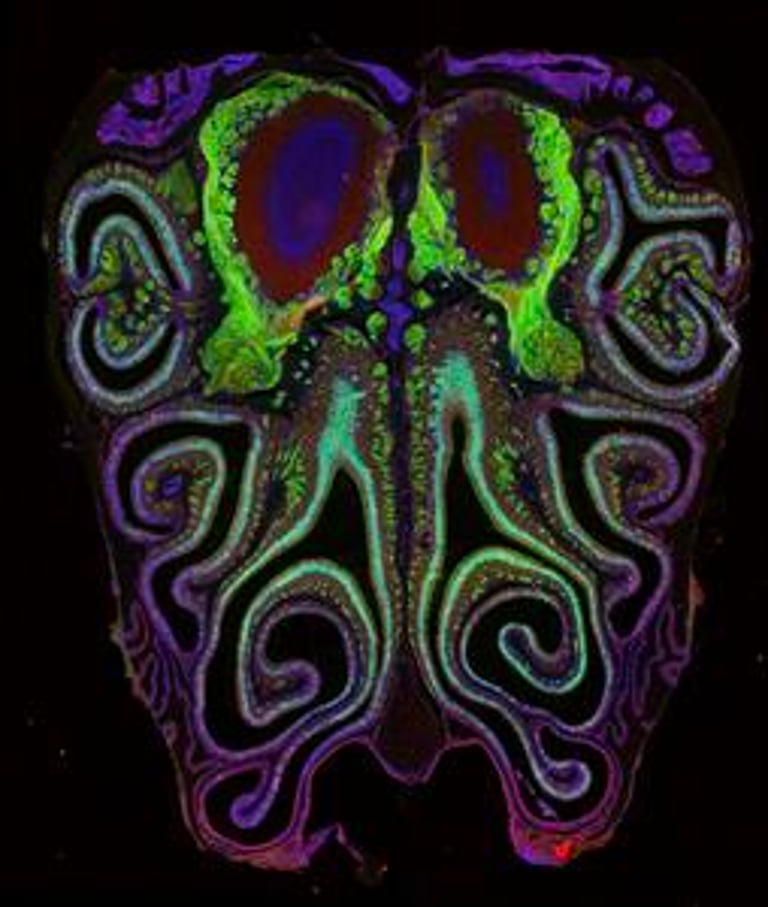

The research was published on April 28, 2026, in Cell, with additional supporting work from Catherine Dulac’s group confirming similar findings in the same issue.
Experts characterize the work as a landmark that fundamentally changes understanding of the olfactory system and resolves a major question about how odor mapping occurs.
Future directions include studying receptor stripes in human tissue to assess cross-species consistency and exploring implications for treating loss of smell and related risks like depression, with a view toward translation to humans.
A detailed study maps about 1,100 olfactory receptors in the mouse nose, showing they are organized in tightly regulated spatial locations within the nasal epithelium and correspond to smell maps in the brain’s olfactory bulb.
Retinoic acid is identified as a crucial driver for establishing this receptor map, with gradients guiding neurons to express the correct receptor type and altering the map when retinoic acid levels are changed.
Authors include Sandeep Datta and collaborators, with funding from NIH, the Yang Tan Collective at Harvard, and NSF graduate fellowships.
The work challenges the view that olfactory receptor expression is largely random and lays a foundation for therapies to restore smell, including stem cell approaches or brain–computer interfaces.
A separate study in the same Cell issue corroborates that a continuous transcriptional code and retinoic acid signaling establish the dorsoventral organization of odor receptors.
The findings were published in the journal Cell on April 28, 2026, with corroboration from Catherine Dulac’s lab in the same issue.
Led by Sandeep Datta at Harvard Medical School, with contributions from Catherine Dulac’s lab, the study appears in Cell on April 28, 2026.
Datta and colleagues emphasize the broader significance of smell for daily life and mental health, noting that restoring olfactory function could improve safety, taste, psychological well-being, and advance basic sensory science.
The study showcases a close collaboration across institutions and adds a new dimension by linking nasal receptor positioning to brain odor maps.
Summary based on 6 sources
Get a daily email with more Science stories
Sources
Neuroscience News • Apr 28, 2026
Research Finally Decodes the Brain’s Smell Map
Nature • Apr 28, 2026
First detailed 'smell map' reveals how noses track odours
EurekAlert! • Apr 28, 2026
Scientists create first-ever ‘smell map’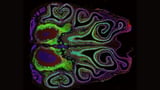
Live Science • Apr 28, 2026
First-of-its-kind map of the mouse nose reveals surprises about the sense of smell