Sydney's Laneways Transformed: Art and Human-Centric Design Revive Urban Spaces
April 29, 2026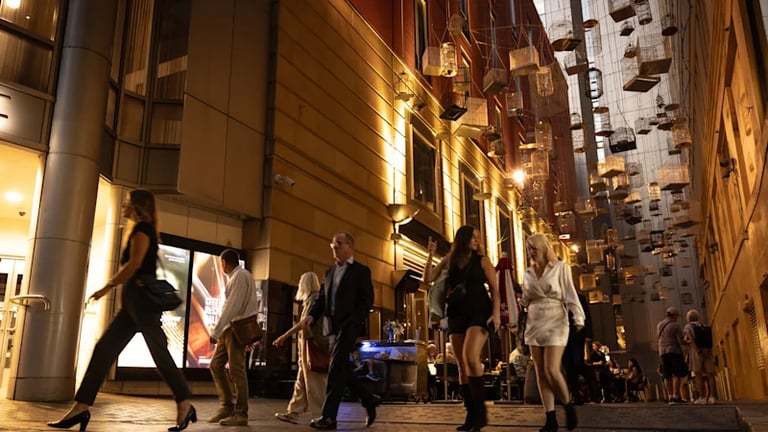

The broader story is a deliberate shift from car‑centric planning to a human‑scale, art‑informed urban revival across Sydney’s laneways.
Market Row uses art to reveal the hidden life of the city, highlighting everyday elements like fire escapes and garbage bins as public art subjects.
Council Place embodies Jan Gehl’s principles, emphasizing intimate, human‑scale, social lanes instead of purely grid‑based development.
Abercrombie Lane, Quay Quarter Lanes, and Temperance Lane showcase a mix of historic references, contemporary installations, and eateries to reinforce a human‑centric city.
Over two decades, city leaders have pushed a laneway revival focused on human‑scaled spaces, art, small bars, and open public use.
Kimber Lane in Chinatown hosts Jason Wing’s In Between Two Worlds, blending Indigenous and Chinese heritage through public art.
Underwood Street and 180 George Street pair large‑scale installations with a suspended 35‑metre blackbutt tree, linking art to new mixed‑use development.
Angel Place sparked the renaissance with Michael Thomas Hill’s Forgotten Songs, turning an abandoned lane into a lasting art installation of bird cages and sound.
Reiby Place presents Patchwork of Light, spotlighting feminist heroes and the transformational power of public art to engage viewers.
Sydney’s revived laneways fuse pedestrian-friendly paths with running public art, such as Tracey Emin’s The Distance of Your Heart, showing ongoing curation in these revived corridors.
Historically neglected laneways were sold off for mid‑century development, eroding neighbourhood character before this art‑led revival.
Summary based on 1 source
Get a daily email with more Australia News stories
Source
The Sydney Morning Herald • Apr 29, 2026
Sydney’s laneways were abandoned to rats and garbage trucks. Now they’re being reclaimed for humans