500-Million-Year-Old Fossil Redefines Origins of Spiders, Scorpions, and Horseshoe Crabs
April 5, 2026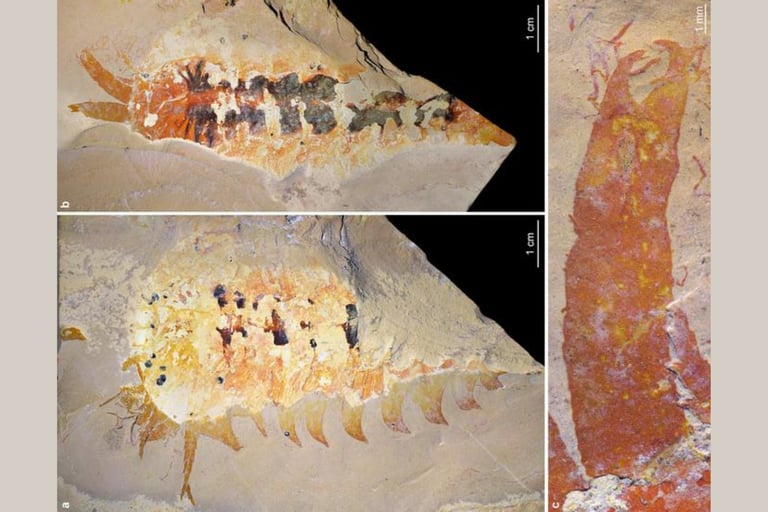

Its paired chelicerae, located beside the mouth, provide the earliest evidence of chelicerates and reveal a modern-style body layout for Cambrian arthropods.
The genus Megachelicerax derives from Greek for ‘large,’ ‘claw,’ and ‘horn,’ with the species name honoring Jacques-Yves Cousteau.
The specimen predates the oldest previously known chelicerates from the Early Ordovician Fezouata Biota by roughly twenty million years, placing it near the base of the chelicerate lineage.
A 500-million-year-old fossil from Utah, Megachelicerax cousteaui, pushes back the origin of chelicerates—the group that includes spiders, scorpions, and horseshoe crabs—by about 20 million years into the Middle Cambrian.
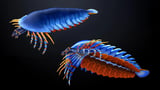
The specimen measures just over eight centimeters and shows a two-region body plan with a cephalic shield, nine body segments, six feeding/sensing appendages, and book-gill-like respiration, plus the oldest known primitive chelicera.
Experts note a rapid Cambrian rate of evolutionary change, with early division into specialized body regions and the emergence of chelicerae reshaping our understanding of chelicerate origins.
The chelicera distinguishes chelicerates from insects and is the pincer-like appendage that is central to their defining anatomy and, in some lineages, venom delivery.
The fossil, collected in 1981 from the Wheeler Formation in the House Range of Utah by Lloyd Gunther, was later studied by Rudy Lerosey-Aubril and named in honor of Jacques-Yves Cousteau.
Its head shield carries six pairs of feeding and sensing appendages and dorsal plates resembling modern horseshoe crabs, indicating advanced features in Cambrian oceans.
Megachelicerax cousteaui appears as a transitional form bridging Cambrian arthropods and later horseshoe crab relatives, suggesting earlier regionalization and chelicera development than previously thought.
The discovery supports a Cambrian origin for chelicerates and implies that key body-plan features were already forming shortly after the Cambrian Explosion.
Overall, the study provides critical data for reconstructing chelicerate evolution, indicating that anatomically complex arthropods occupied Cambrian oceans and that both biology and environment shaped their success.
Summary based on 3 sources
Get a daily email with more Science stories
Sources
ScienceDaily • Apr 3, 2026
This tiny claw in a 500-million-year-old fossil just rewrote the origin of spiders
Smithsonian Magazine • Apr 2, 2026
This 500-Million-Year-Old Fossil of a Claw-Bearing Predator Uncovers the Origins of Spiders, Scorpions and Other Arthropods
Noticias Ambientales • Apr 5, 2026
Megachelicerax cousteaui: the 500-million-year-old fossil that predates the origin of spiders and scorpions