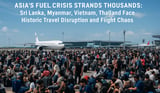
Hormuz Blockade Sparks Travel Chaos in Asia: Fuel Shortages Disrupt Flights, Hike Costs
April 5, 2026

South Korea races to secure alternative supplies, risking refinery interruptions and tighter domestic fuel availability, which would lift transportation and industrial costs.
Australia faces Easter travel disruptions amid fuel shortages, with the Energy Minister urging consumption discipline and noting substantial fuel reserves along with ongoing airspace restrictions and conservation.
The broader implication is widespread delays, cancellations, reroutings, and higher costs; travelers should book in advance for Easter 2026 and consider alternative routes while governments seek stabilization measures.
Transport and tradeface higher fuel costs across shipping and airlines, with impacted public transport fares and potential inflation in affected economies.
Japan endures inflationary pressures and higher energy costs as reduced Saudi supply tightens access to light sweet crude, affecting refining and downstream sectors.
Japan faces rising fuel costs and airspace restrictions in the East China Sea, with JCAB-imposed limits; airlines confront higher costs and potential fare pressures, prompting emergency measures and conservation.
South Korea experiences energy-saving measures and higher aviation fuel costs, with eastward airspace restrictions affecting flights to China and Southeast Asia, underscoring the need for advance bookings.
A regional travel crisis in Asia driven by the 2026 Hormuz Blockade is triggering widespread fuel shortages, causing flight cancellations, delays, and higher costs across Sri Lanka, Myanmar, Vietnam, Laos, South Korea, Thailand and beyond, with tourism economies at risk.
Thailand and Indonesia are contending with overwhelmed hubs and emergency scheduling as airlines cut capacity and routes amid the fuel squeeze.
Sri Lanka, as a focal point, introduces a Tourist-Specific QR Code fuel pass and imposes severe weekly fuel limits for private vehicles, while SriLankan Airlines reduces services due to pricier aviation fuel and uncertain supply.
Travelers are advised to monitor flight updates, budget for higher costs, consider alternative destinations, and stay informed about local conditions.
China, the largest oil importer, faces a sharp drop in Saudi supply for April, risking refinery output, higher factory costs, and inflationary pressure with ripple effects on petrochemicals and broader trade.
Summary based on 5 sources