Sydney's East-West Divide: Population Shifts Amid Property Boom and Infrastructure Growth
April 6, 2026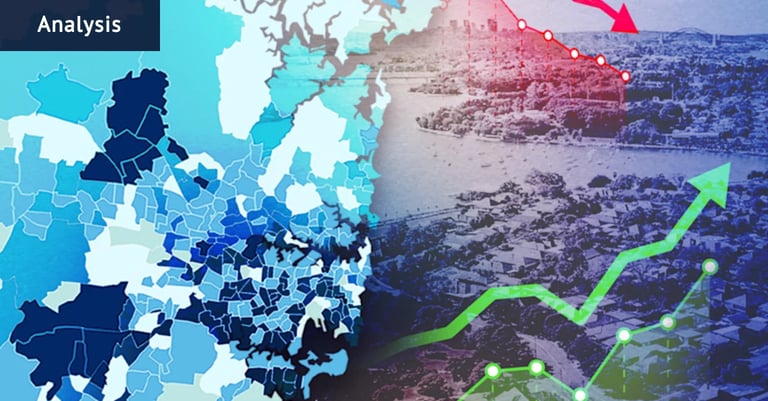

North‑west and southwest suburbs posted double‑digit population growth, such as Box Hill‑Nelson and Marsden Park‑Shanes Park, while affluent eastern suburbs like Coogee‑Clovelly, Turramurra, and Hunters Hill‑Woolwich declined or stagnated.
While western Sydney gains from new infrastructure and jobs, inner-city and eastern suburbs face depopulation and shifting demographics, underscoring the need for balanced housing development to avoid a lopsided urban future.
The government’s rezoning policy aimed at boosting density near transport hubs has delivered about 3,500 new public, community, and affordable homes, but more comprehensive supply is still required.
Sydney shows a clear east–west population divide in 2024–25, with more than 30,000 people leaving eastern Sydney for other regions while western Sydney remains relatively stable.
Between 2023–24, about 90% of the 33,282 residents who left eastern Sydney relocated to regional NSW or Queensland, while western Sydney experienced a smaller outflow.
Observers frame the eastern exodus as a consequence of the property boom, noting a “great baby divide” and stressing the need for more widespread housing supply beyond growth corridors, unlike Melbourne where faster construction helps keep prices down.
Net inflows in 2024–25 were strongest in regions like Blacktown and southwestern Sydney, with double‑digit growth in some northwest and southwest neighborhoods aided by new infrastructure such as the North-West Metro, the M12, and access to Western Sydney Airport.
Western Sydney’s infrastructure and job growth—particularly the North-West Metro, M12, and Western Sydney Airport access—are reshaping perceptions and drawing residents.
In 2024–25, 42 Sydney suburbs registered more deaths than births, driven by an ageing population and slowing birth rates, signaling shifts in age structure and housing affordability pressures.
Within Sydney, population density peaks in CBD-adjacent areas (e.g., Sydney South‑Haymarket) and is lowest in more distant regions like Bilpin‑Colo‑St Albans.
Housing affordability remains a key driver of eastward out-migration, pushing young families to seek stability in western Sydney.
Eastern suburbs with ageing, wealthy populations are seeing declines in families and births, while western and outer western regions experience rising births.
Summary based on 2 sources
Get a daily email with more World News stories
Sources

The Sydney Morning Herald • Apr 6, 2026
How much your Sydney suburb grew (or shrank) last year
The Sydney Morning Herald • Apr 6, 2026
Sydney’s childfree suburbs? The downside of property boom